



TULSA, Okla. — It's time to celebrate our nation's 250th birthday and many of us will do so beneath the dazzling display of fireworks.
As you do so this year, you can be equipped with some extra knowledge with how each of those controlled explosions in the sky get their color.
WATCH: How fireworks get their colors
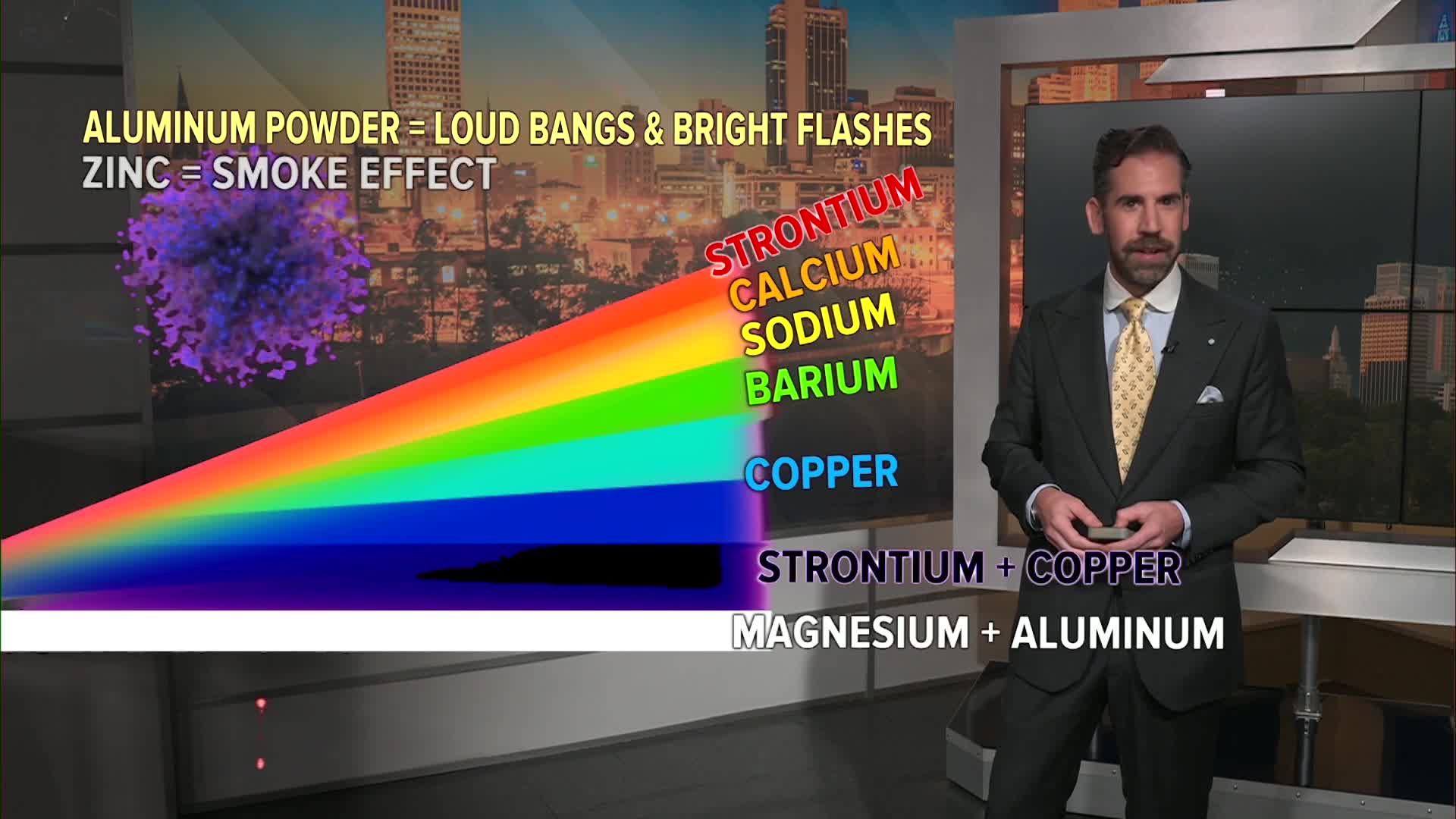
Let's break down the chemistry by color starting with one end of the spectrum. The color red is created by the 38th element, strontium. It's actually the salt, strontium nitrate that creates this patriotic color.
Calcium helps to create orange. Yellow is brought to us by sodium nitrate, which is another salt inside the rocket. Barium chloride is used for green. And despite this element's color, copper is actually used to create blue.
Like with the green color, it's actually the metal salt, copper chloride that creates the hue in the firework. For violet, it's a combination of the earlier mentioned elements of strontium and copper. Finally, magnesium and aluminum are used to bring a silver or white burst to the sky.
But fireworks are more than just colors; they are bursts of light, sound, and smoke. The bright flashes and powerful booms are created by aluminum powder.
The smoke effect from these fireworks is often done with the help of zinc. It takes a lot of the periodic table and a spark to bring us these celebratory shows above.
And here's a pro tip for this year: if you don't want to find yourself in the lingering smoke from those fireworks, choose a location south of the display to take it in—a southerly breeze will move that aggravating plume away from your location. Have a wonderful and safe holiday weekend!
Stay in touch with us anytime, anywhere --
- 2 News Oklahoma on your schedule | Download on your TV, watch for free. How to watch on your streaming device
- Download our free app for Apple, Android and Kindle devices.
- Like us on Facebook
- Follow us on Instagram
- Watch LIVE 24/7 on YouTube
