

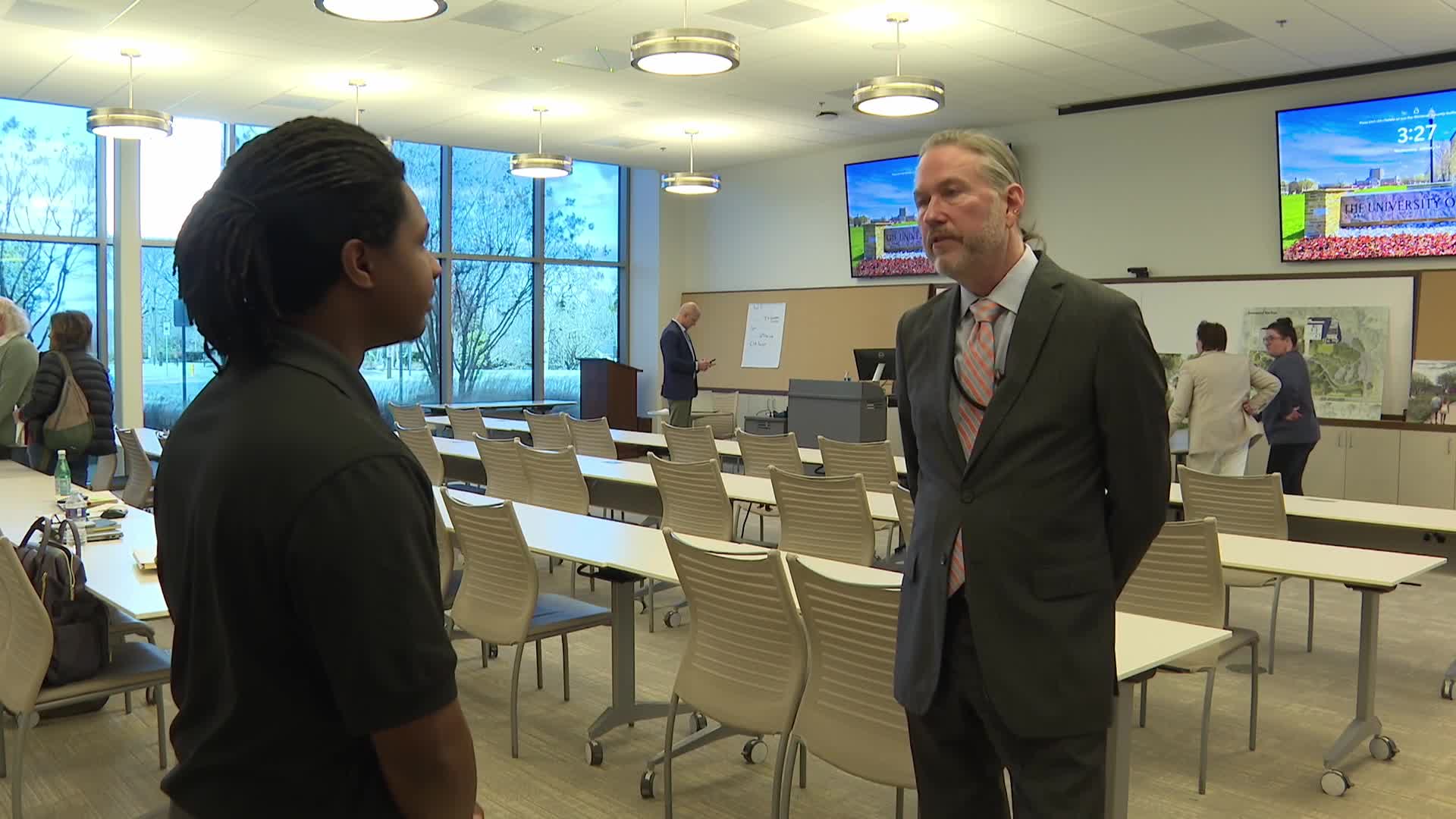


TULSA, Okla. — The Gilcrease Museum shared its vision for a future design and invited the public to weigh in on proposed changes to enhance the historic Tulsa landmark's functionality and visitor experience.
During a community meeting on Jan 14, residents heard details about the museum’s master plan, which includes ideas such as moving parking closer to the museum and adding more shaded areas throughout the grounds.
WATCH: Gilcrease Museum shares design update plans while seeking community input
Chelsea Herr lives near the Gilcrease Museum.
“It’s great to see options for how we can move forward into the future,” Herr said.

Herr said she feels a strong connection not only to the museum’s collection, but also to the land itself.
One of the changes Herr said she supports is adding more shaded areas for visitors.
“More shaded areas are a great idea, there really aren’t many places to hang out right now," Herr said.
Brian Whisenhunt, the museum’s executive director, said the community response so far has been encouraging.
“It’s been amazing to hear from Tulsans,” Whisenhunt said.
He explained that the master plan focuses on improving walkability, visual appeal, and overall accessibility, making pathways more inviting and the campus more welcoming to visitors.
Previously, 2 News reported on a $25 million road rehabilitation project near the museum and a planned 400-acre trail in the area.
Herr said she was excited by the possibilities but also had suggestions for the plan moving forward.
“I’d love to see more incorporation of Indigenous plants and knowledge,” Herr said.
2 News took this question to Whisenhunt.
“We’re definitely thinking about how to represent native species and landscapes,” Whisenhunt said.
Museum leaders said parts of the project could be completed by early 2027, though the total cost and funding sources have not yet been finalized.
Stay in touch with us anytime, anywhere --
- 2 News Oklahoma on your schedule | Download on your TV, watch for free. How to watch on your streaming device
- Download our free app for Apple, Android and Kindle devices.
- Like us on Facebook
- Follow us on Instagram
- Watch LIVE 24/7 on YouTube
