

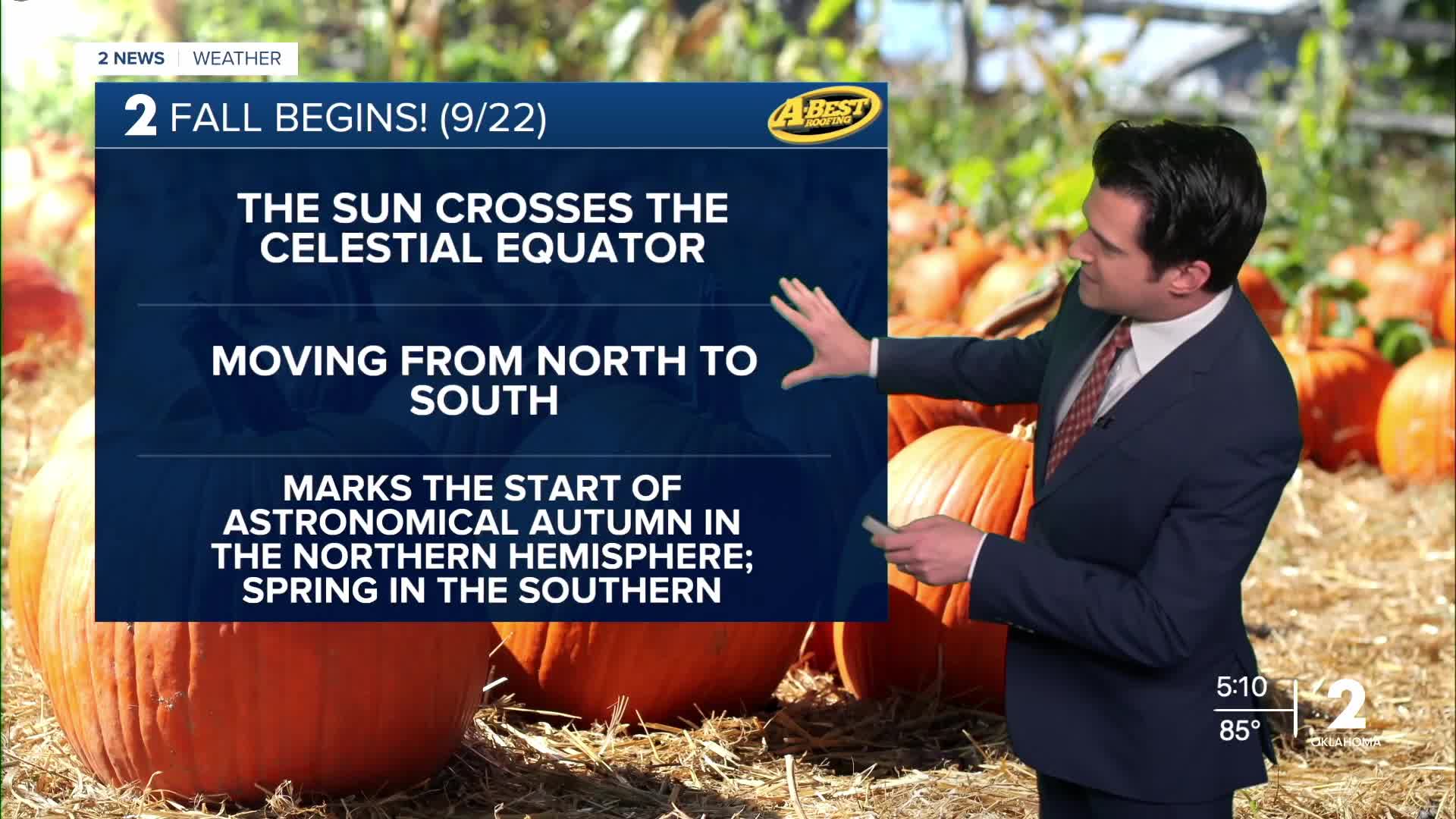


TULSA, Okla. — Welcome to the first day of astronomical fall. It starts at 7:05pm central daylight time and is called the autumnal equinox. On this Tuesday, we had morning lows in the 60s and daytime highs in the 80s. Hopefully we can dial down those temperatures in the next couple of weeks to reflect the season more. Fall colors usually peak around here in late October and into early November.
With the equinox, the sun crosses the celestial equator, moving from north to south. While fall begins here in the northern hemisphere, spring starts in the southern hemisphere.
Why don't we have an equal day and night on the equinox? It has to do with several factors. First, atmospheric refraction bends sunlight, which adds daylight. As of today, 9/22, we have 9 extra minutes of daylight. Not even close to being equal with the night. Then there's the sun's edge. Sunrise and sunset times use the sun's upper edge and not the central part of the sun. So when do we have nearly equal day and night? That comes on Saturday, September 26th. It's called the Equilux. The word comes from Latin roots meaning "equal light."
 Facebook
  TikTok
  YouTube
 Instagram
 Threads
 X
X