

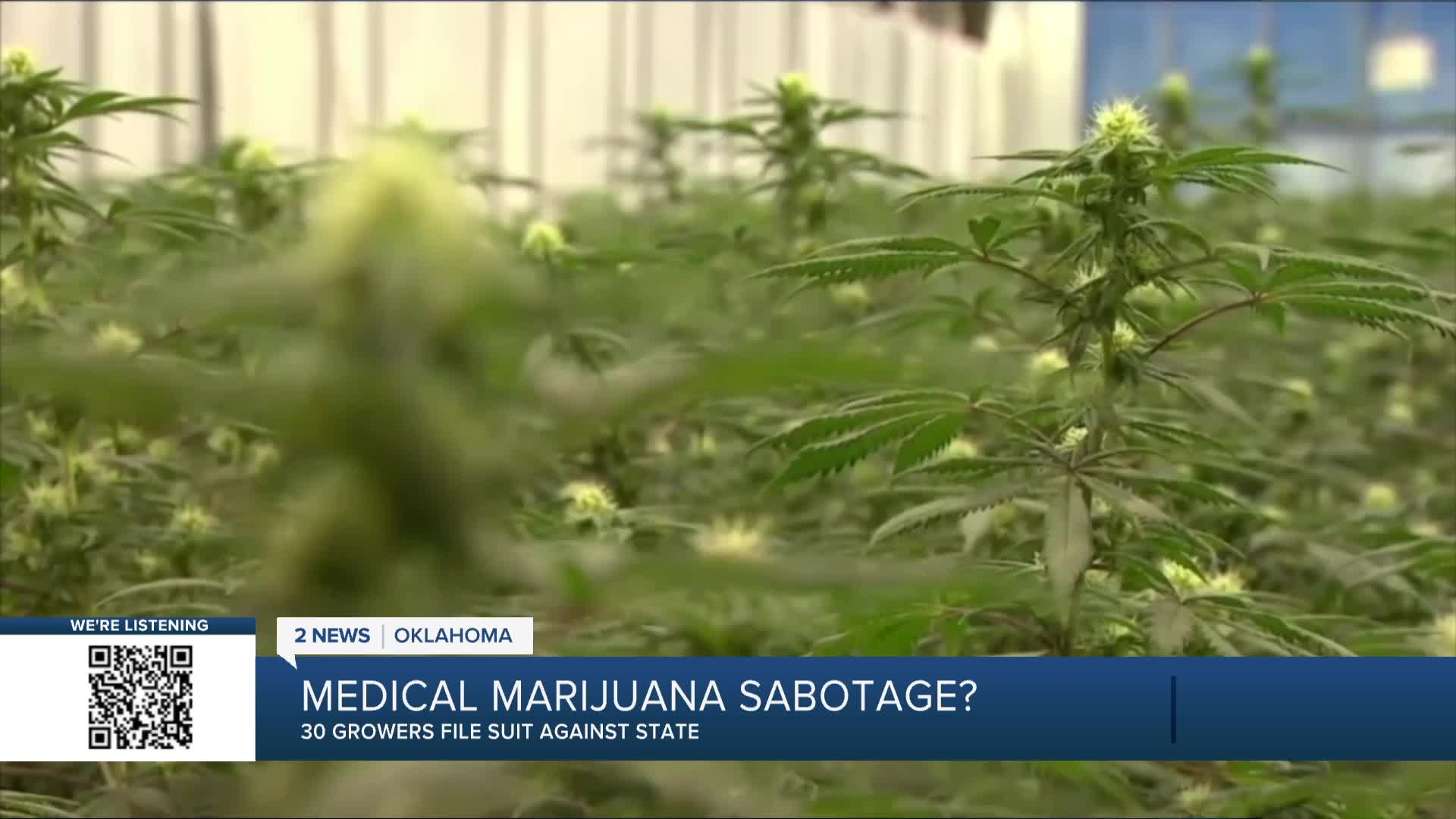


TULSA, Okla. — 30 medical marijuana farmers and business owners are suing Governor Stitt and other state agencies.
The suit, seeking class action status, claims that Oklahoma is “creating a system that makes it impossible” to do business.
WATCH: Lawsuit alleges Oklahoma deliberately cripples marijuana industry
They are represented by Tulsa-based attorney Dana Kurtz.
“They don’t want to be in a lawsuit,” she said. “They want to operate their business.”
Randi Guzman of At Joy Growers, based out of Quapaw, Oklahoma, says she is tired of being treated like a criminal.
“We, as legal operators, want illegal operations shut down just as much as state agencies do, but we are not those people,” she said.
At issue: legislation passed in 2024 that requires medical marijuana farms to obtain a “certificate of occupancy.”
In simple terms, a COO is proof that the building is safe. Typically, they are required for new construction or when the building's use changes.
But Kurtz says making the law retroactive, when her clients have already invested millions of dollars into a facility, is unconstitutional.
“If the government truly intended for this to be a safety issue, they would have shut down every business, not based on some retroactive date,” said Kurtz.
The allegations surrounding the COO law don’t end there. Growers claim businesses that are taking the necessary actions to obtain a COO are met with complications and delays.
“It’s that goal post, that finish line, it’s always moving,” said Guzman. “It beats you down; it beats you down mentally.”
The suit alleges COOs take two to three weeks to process unless it’s a medical marijuana farm.
“Some businesses, two years, three years,” said Kurtz. “They’ve tried to get a certificate of occupancy, but all they face is government red tape.
A recent court victory gives the growers some hope.
While a certificate of occupancy is for buildings, the Oklahoma Bureau of Narcotics (OBN) pulled At Joy’s licensing for their indoor and outdoor grow operations. A judge recently ruled that OBN cannot force At Joy to shut down the outdoor grow operation, when it is not legally required to have a COO on an outdoor farm.
At Joy is still working to get the COO for the indoor operations.
Kurtz says there is more proof that these complications are part of a plan by these state agencies, and it comes from their own words in the media and on social media.
Stitt has been pushing for a new state question to end medical marijuana legalization in Oklahoma. “It’s time to shut this broken system down and protect our kids and communities,” he tweeted on March 3.
The lawsuit also points to a press conference where Donnie Anderson of the OBN told reporters, “even the people who do this legally, we’re driving them out of business.”
Guzman says they just want to do the job they are legally allowed to do.
2 News reached out to the governor’s office as well as the OBN and did not hear back.
You can click this link to see cannabis-related statistics, including how many state-issued licenses are in Oklahoma.
Stay in touch with us anytime, anywhere --
- 2 News Oklahoma on your schedule | Download on your TV, watch for free. How to watch on your streaming device
- Download our free app for Apple, Android and Kindle devices.
- Like us on Facebook
- Follow us on Instagram
- Watch LIVE 24/7 on YouTube
