

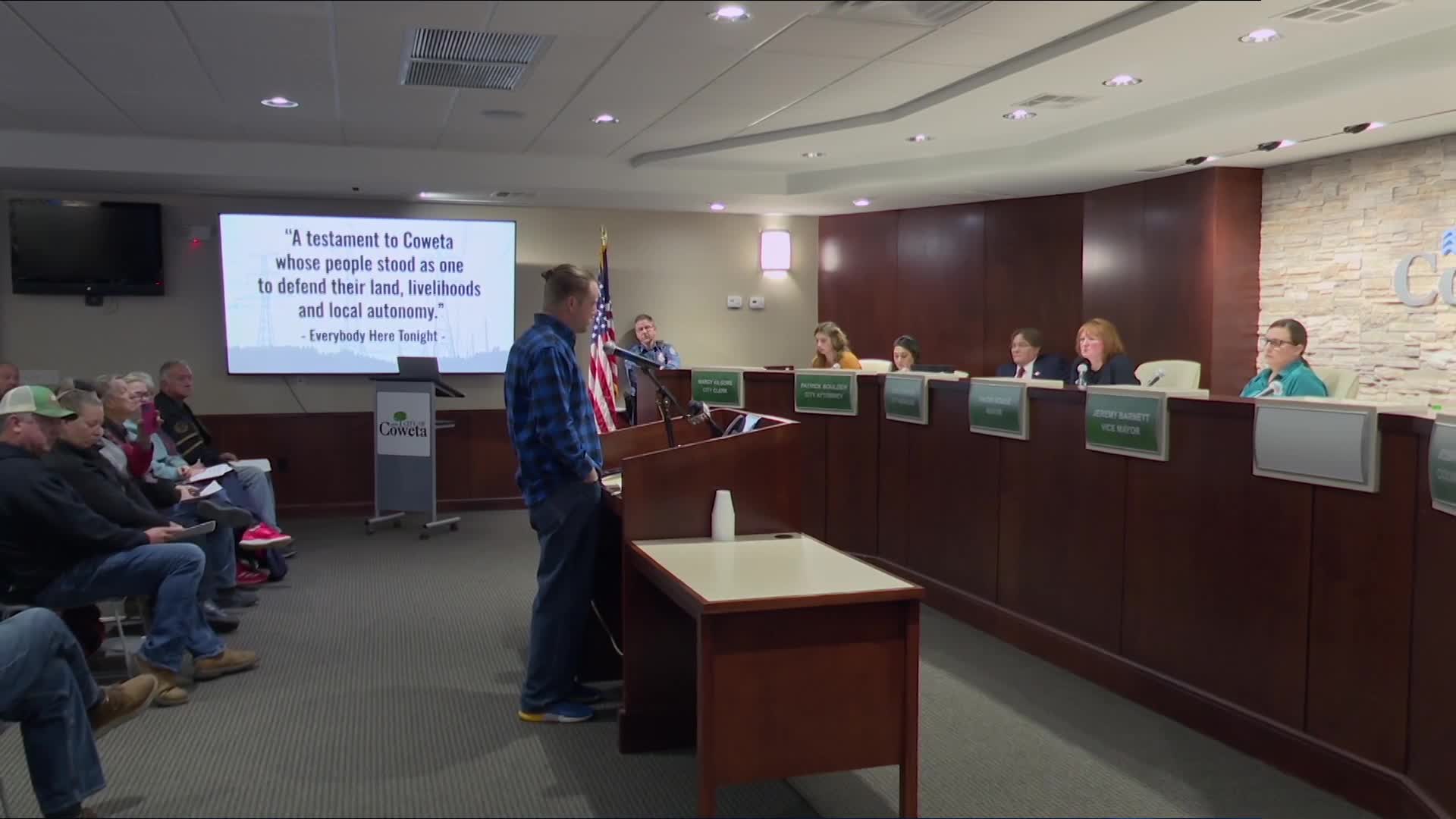


COWETA, Okla. — A heavily-anticipated planning commission vote on a polarizing data center zoning proposal is pushed back yet again at the request of its would-be builders.
"Project Atlas" would build on a large plot of recently-annexed land south of Coweta, as 2 News first reported on Oct. 6.
After being pushed back from Dec. 1 to Dec. 15 in November, Coweta City Manager Julie Casteen confirmed the planning commission will now vote on Jan. 19, with a potential city council hearing Feb. 2. This, Casteen said, was granted to allow the builders to provide more answers and insight to the council and the public.
- Previous coverage >>> LISTENING IN COWETA: Farmers raise concerns over planned data center
"You need to represent your constituents," land use advocate Darren Blanchard told the council during his scheduled presentation. "If we don't want these projects, then represent your constituents. Represent the community of Coweta. Think about all of the consequences that come with it."
"I have the longest residential border with the proposed data center," Sharon Heymans told 2 News after the city council meeting. Heymans said she hasn't fully taken a stance yet.
WATCH: Final Coweta data center vote delayed to February at earliest:
"I think there are still some outstanding questions that the city council is working to resolve so that folks like myself can clearly understand how this is going to impact our lives," Heymans said.
Professor Eric Olson from the University of Tulsa School of Energy Studies said Green Country, in general, still needs a lot of answers for any proposed data centers before they get built.
"My favorite quote for economics is, 'There are no solutions. There are only trade-offs," Prof. Olson told 2 News via Zoom.
WATCH: Full interview on data centers with Prof. Eric Olson from University of Tulsa:
"(Data centers) are very resource intensive, so they're going to use a lot of power and a lot of water," the professor continued. "That being said, the local areas will probably get an additional source of tax revenue, so I think that's probably a plus. However, you know, the actual long-term effects on having those in your community - it's not really well understood."
Stay in touch with us anytime, anywhere --
- 2 News Oklahoma on your schedule | Download on your TV, watch for free. How to watch on your streaming device
- Download our free app for Apple, Android and Kindle devices.
- Like us on Facebook
- Follow us on Instagram
- Watch LIVE 24/7 on YouTube
