

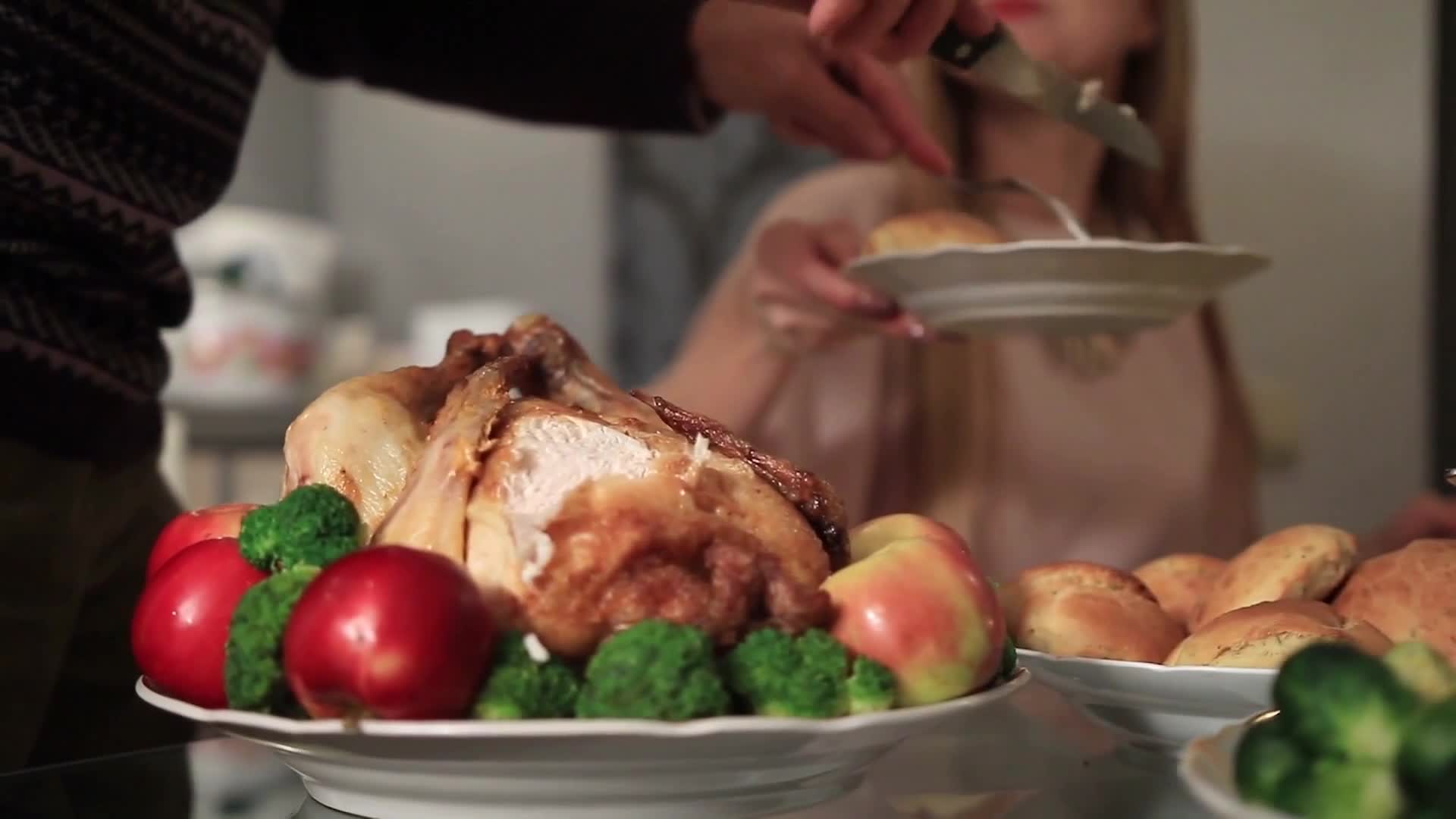


Broken Arrow, Okla. —Whether you are cooking your first turkey or you are a veteran who has just run into a surprise, Thanksgiving can feel like a high-pressure exam. We sat down with Bill Nolan, a chef by trade and a supervisor at the Butterball Turkey Talk-Line, which is celebrating its 45th year of answering holiday cooking questions.
Nolan's message: food safety comes first, and you never have to figure it out alone.
Who to call when you need help
Nolan says the Talk-Line is there for exactly the moments when a plan falls apart. Keep these options handy for the big day:
- Call 1-800-BUTRBAL (1-800 Butterball) to talk with one of the company’s experts, who can walk you through thawing, cooking, carving and storing leftovers.
- Visit Butterball.com for charts and a turkey calculator that tells you how long it will take to roast.
- Watch the carving video. Click the “how to” link on its website for a demonstration.
Step 1: Thaw it safely
Thawing is the number one question the Talk-Line gets, and it has been for all 45 years.
Cold-water thawing (the rescue plan)
Still frozen on Thanksgiving morning? You still have a chance. Fill a sink , tub or cooler with cold water and submerge the turkey breast side down. Change the water about every 30 minutes, because it warms up as the turkey sits in it. This can cut thawing from days to hours. If you go this route, Nolan says to call the Talk-Line and an expert can walk you through it.
Step 2: Cook it to the right temperature
The open pan method
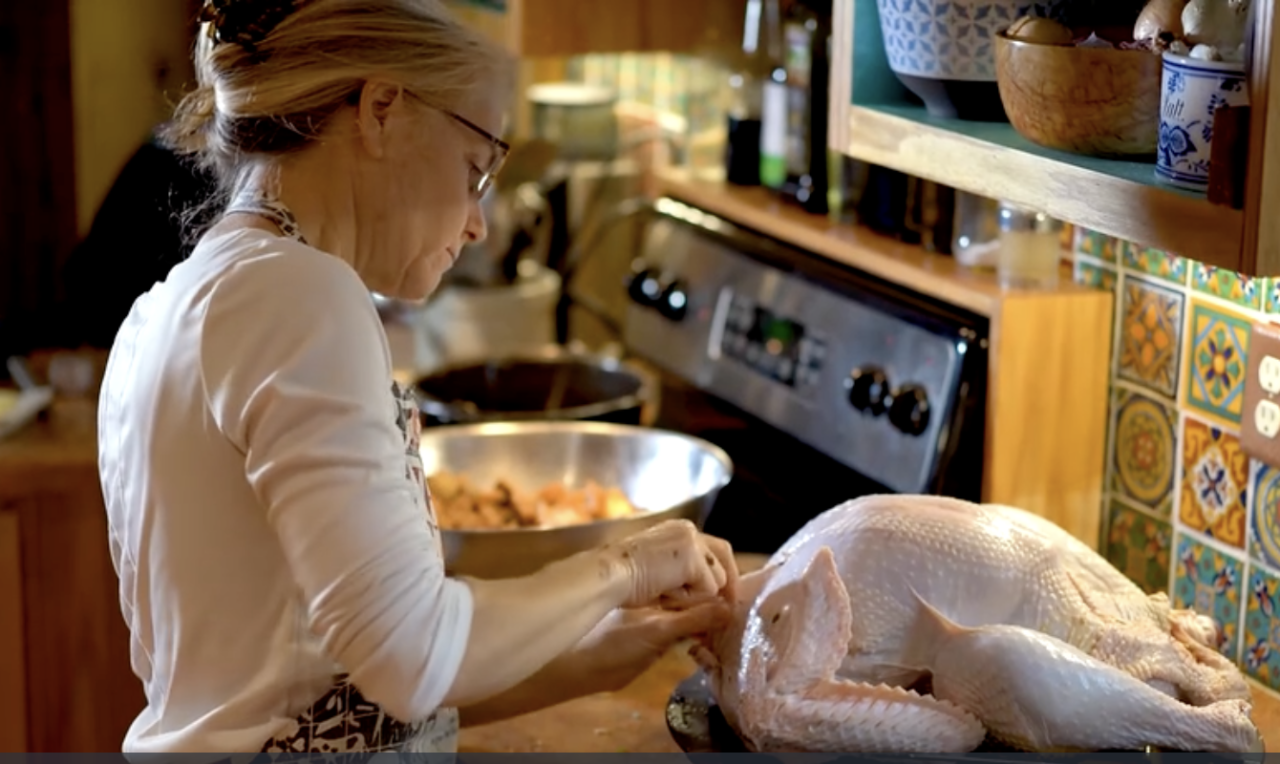
Butterball’s recommended approach is simple. Take the turkey out of the wrapper, remove the neck and giblets from the cavities, and place the bird on a flat rack in a pan about 2 to 3 inches deep. Brush it with vegetable oil, add a little salt and pepper if you like, and roast at 325 degrees. Plan on roughly 3 to 5 hours depending on size; a 14-pound turkey takes about 3 to 3.5 hours.
Use a thermometer
Timing charts are only a guide. Nolan says the food thermometer is the best way to know your turkey is done, and he recommends cooking to an internal temperature of 170 degrees in the breast and thigh.
Faster cooking option: spatchcocking
Spatchcocking means removing the backbone so the turkey lies flat. Turn the bird over, snip up both sides of the backbone with good poultry shears (or a cleaver), and remove it. Flip the turkey, press down on the breast until you hear the breastbone snap. It will now lay flat. Because you are cooking a flat piece meat instead of a round mass, you can shave about one-third off the cooking time.
Check the fit first.
A turkey of 16 pounds or more may not fit in the oven on a pan once it is flattened, though it will fit on a grill.
Step 3: Stuffing and dressing safety
Nolan prefers to bake stuffing in a pan for the crisp edges. If you stuff the bird, follow these rules:
- Do not stuff the turkey the night before. Raw turkey sitting with stuffing overnight is a safety risk.
- Do not stuff the turkey with hot stuffing. Cool stuffing overnight if possible.
- Coming out of the over take the temperature of the stuffing as well as the turkey. Stuffing must reach 165 degrees to be food safe.
Cooking for a smaller crowd
You do not need a 14-pound bird for two people. Nolan points to bone-in turkey breasts, 3-pound turkey roasts (which come with a gravy packet, since they produce fewer juices), turkey tenderloins in some markets, and cook-from-frozen turkeys and turkey breasts. Roasts come in all white meat, white and dark meat, Cajun and herb flavors.
Step 4: Rest and carve
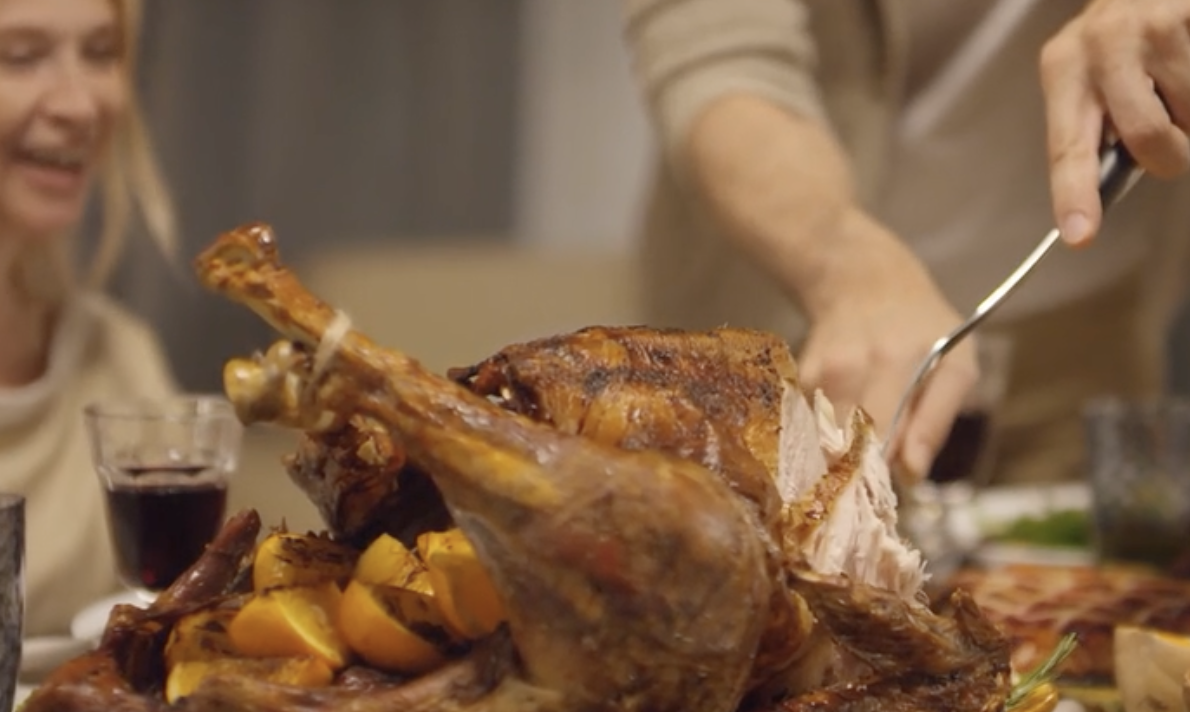
Let the turkey rest at least 20 minutes after it comes out of the oven. Resting lets the juices reabsorb; slice too soon and you lose them and the meat shreds. Have a long, sharp knife and a fork ready. Nolan’s trick is to make a horizontal cut along the bottom of the breast before you make the vertical slices, so the slices fall away cleanly. Go slowly and let the knife do the work.
Step 5: Store leftovers the right way
- Move fast. Remove the meat from the turkey bones and get it into the refrigerator within about 2 hours of coming out of the oven.
- Refrigerate for 3 to 4 days. Leftovers are safe in the refrigerator for that long, if you plan to keep leftovers longer freeze them.
- Freeze. Wrap well and press out the air (or use a vacuum sealer). Plastic wrap plus a layer of foil works. Frozen leftovers keep for about 6 months.
Watch: Staying safe while enjoying your Thanksgiving leftovers
What if you keep leftovers longer than 4 days in the fridge? Nolan says you run the risk of foodborne illness and spoilage. “It’s not worth making somebody sick to save some food,” he says.
Quick food safety checklist
- Roast at 325 degrees and check with a food thermometer: 170 degrees in the breast and thigh, per Nolan.
- Stuffing must reach 165 degrees.
- Rest the turkey at least 20 minutes before carving.
- Refrigerate leftovers within 2 hours; eat within 3 to 4 days or freeze.
- Questions or a mid-cooking emergency? Call 1-800-BUTTERBALL or visit Butterball.com.
 Facebook
 TikTok
 YouTube
 Instagram
 Threads
 X
This story was initially reported by a journalist and has been converted to this platform with the assistance of AI. Our editorial team verifies all reporting on all platforms for fairness and accuracy.
