

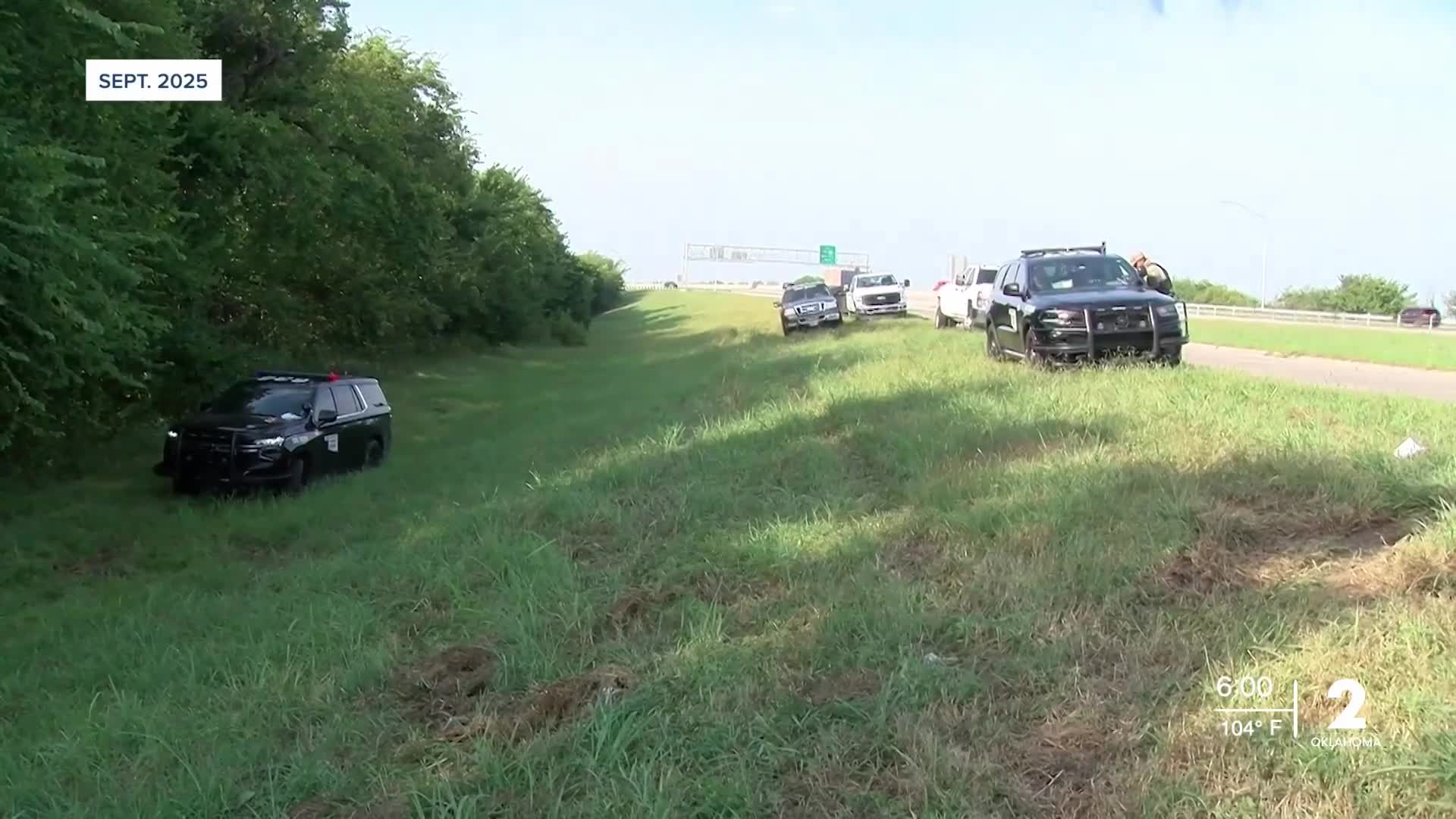



TULSA, Okla. — The two week Operation SAFE initiative spearheaded by Governor Kevin Stitt to clean up Tulsa's homeless encampments cost more than half a million dollars. The state said the City of Tulsa is responsible for the bill.
In a letter sent to Tulsa Police Chief Dennis Larsen on Aug. 10 by State Chief Operating Officer David Ostrowe, the state spent $523,873.90 in state funds to clean up encampments across Tulsa.
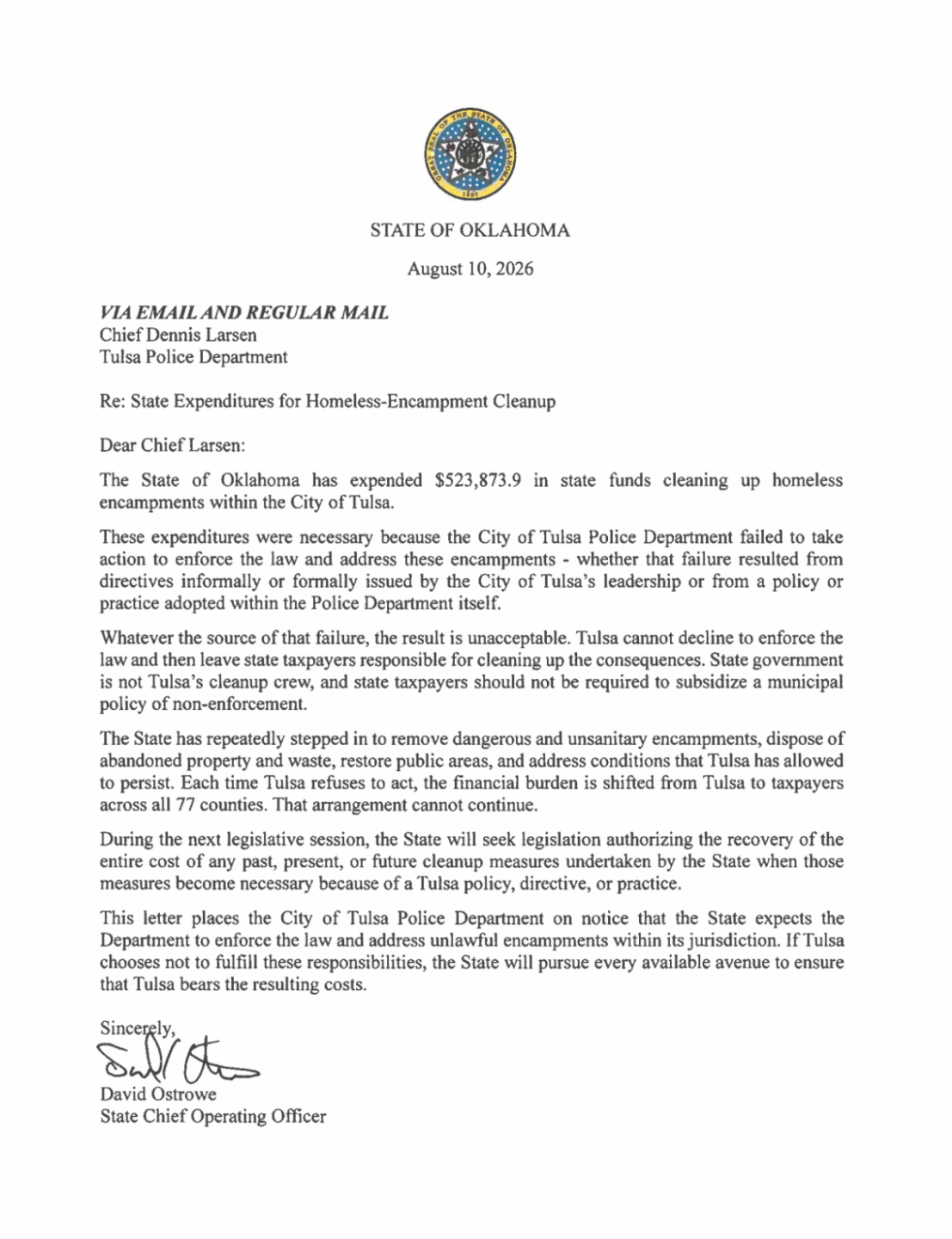
"These expenditures were necessary because the City of Tulsa Police Department failed to take action to enforce the law and address these encampments - whether that failure resulted from directives informally or formally issued by the City of Tulsa's leadership or from a policy or practice adopted within the Police Department itself," wrote Ostrowe.

Local News
Stitt shares plan to use OHP to clear homeless camps in Tulsa
Operation SAFE launched in Sept. 2025 at the directive of Gov. Stitt, saying Mayor Monroe Nichols and Tulsa leadership "haven't met the level of action needed to keep neighborhoods safe."
“The State made a decision to conduct a large-scale cleanup of property that it owns and maintains. It is difficult to understand how the City of Tulsa then becomes financially responsible for that cleanup simply because the State wants to be reimbursed for their own expenses.
It should be of note that the City of Tulsa already dedicates significant resources to maintaining State property. Tulsa spends just over $300,000 yearly, which is almost $2 million spent since 2021, to dedicate two crews to cleaning approximately 300 miles of State highways. If the State’s position is that governments should simply bill one another for work they believe the other should have done, then we are certainly capable of having that conversation - and we can start by sending the State the bill for the work the City is already doing on its property.
We could also begin accounting for the significant time and resources the City has spent responding to the consequences of the State’s operation, including helping locate individuals who were displaced, reconnecting them with medications and identification, and responding to the impacts in our parks and neighborhoods after people were displaced without a place to go.
This should not be a competition over who can send the other government the largest bill. The City and the State should be working together to address homelessness and public safety, not shifting costs onto one another. Tulsa will continue to do its part, especially through proven and effective programs like Safe Move Tulsa, our strategy to end street homelessness that has already moved nearly 600 people out of homelessness, closed 10 encampments, provided housing services for 40 animals, and cleaned nearly 190 tons of trash and debris in less than a year.”
The state shared the letter they sent to Oklahoma City Police Chief Ron Bacy, putting a $375,701.21 bill on them for Operation SAFE costs there.
As of Aug. 13, a spokesperson for City of Norman said they have not received any billing notice.
Ostrowe said the State will seek legislation during the next session authorizing the recovery of the entire cost of any past, present, or future cleanup measures undertaken by the State when those measures become necessary because of a Tulsa policy, directive, or practice.
Stay in touch with us anytime, anywhere --
- 2 News Oklahoma on your schedule | Download on your TV, watch for free. How to watch on your streaming device
- Download our free app for Apple, Android and Kindle devices.
- Like us on Facebook
- Follow us on Instagram
- Watch LIVE 24/7 on YouTube
