

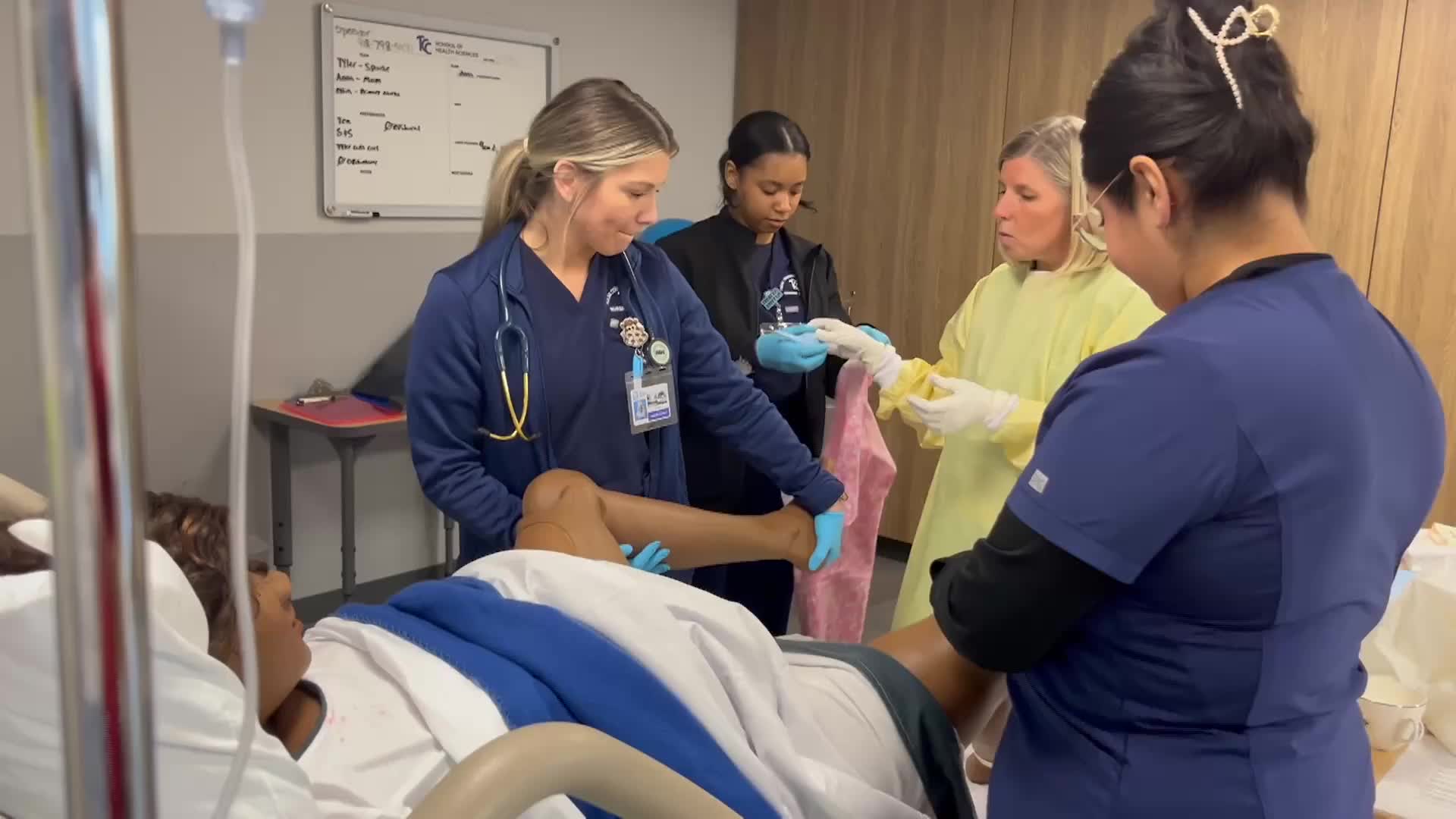


TULSA, Okla. — Tulsa Community College nursing students practice on patients that blink, talk and even give birth — all before ever stepping into a real hospital room.
The high-tech mannequins at TCC give students a safe space to sharpen their skills, and they are a key part of how the program is training more nurses to fill critical roles across the Tulsa community.
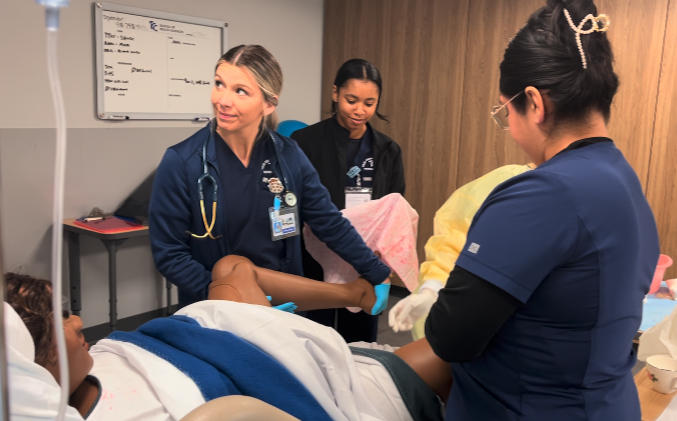
"Being able to role play different scenarios here has been a really valuable experience. It helps take away a little bit of the anxiety when you're facing an actual patient," said Hailey Walker, a nursing student in her final semester at TCC.
TCC offers two tracks for nursing students. The traditional track is a 4-semester program for students with no prior nursing experience. The career mobility track is a 3-semester program designed for LPNs and paramedics. Both tracks prepare students to sit for the NCLEX RN exam to become registered nurses.
The program admits classes twice a year — in January and August. For the upcoming January class, TCC is admitting 166 students.
Enrollment has grown significantly in recent years. After receiving ARPA funding following COVID-19, and with support from the TCC Foundation, the college expanded its lab and classroom space.
"We used to be more in the 300s and now we have 534 nursing students, so we've been able to grow our classes," said Dr. Lauri Jones, TCC's nursing program director.
That growth comes as Oklahoma continues to face a nursing shortage. TCC's nursing graduates are staying in the community and filling those gaps — with job placement rates near 100% and students often securing positions a couple of months before graduation.
Pass rates on the NCLEX RN licensing exam have remained strong, though Jones noted a slight national and statewide dip. TCC recorded a 92% pass rate in 2024. The national rate in 2025 was approximately 83%.
"One of the things we're doing here at TCC to address that is looking at changing our curriculum to more of a competency-based curriculum, which will better prepare graduates also for when they enter into the hospitals in the community," Jones said.
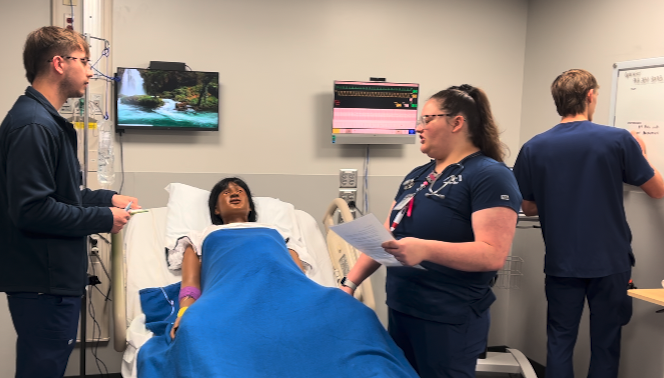
Beyond the mannequins, students also train on electronic health records, medication dispensing systems and scanning technology — tools they will use in real hospital settings. After each simulation, students participate in a debriefing session to review their decisions in a supportive, judgment-free environment.
"Any mistakes that happen, that's OK. The students are very supportive after a simulation," Jones said. "It's not judgmental and the students are in a safe space and very supported so that they can make those mistakes here versus when they are in practice."
For students like Hailey, the program's accessibility was a major draw.
"I spoke to an advisor and the program here at TCC is just so accessible and affordable," she said. "I got everything switched over and I've loved it ever since."
Hailey said she hopes to enter the burn specialty after graduation, and has already received an offer from oncology at Saint Francis as an alternative.
"Going into the 2nd and 3rd semesters, our mannequins get a little more advanced with what they can do — different pulse feelings, different sounds, they blink, even their pupils contract, which I thought was absolutely amazing," she said.
 Facebook
 TikTok
 YouTube
 Instagram
 Threads
 X
This story was initially reported by a journalist and has been converted to this platform with the assistance of AI. Our editorial team verifies all reporting on all platforms for fairness and accuracy.
