




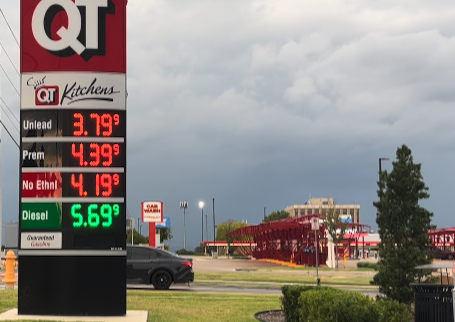
TULSA, Okla. — Diesel prices in Tulsa have shattered records, reaching $5.67 per gallon according to GasBuddy. Its fuel industry analyst says the national average could climb even higher, potentially hitting $6 within days.
Patrick De Haan, head of petroleum analysis at GasBuddy, said the surge is being driven by two simultaneous geopolitical crises half a world away.
"Oil is back above $100 a barrel due to escalating tensions with Iran closing the Strait of Hormuz, plus Ukrainian drone attacks on Russian refineries. Russia normally exports diesel globally, but they've banned exports due to supply shortages at home," De Haan said.
New U.S. strikes on Iranian tankers in the Gulf of Oman have prompted Iran to threaten retaliation, prolonging the closure of the Strait of Hormuz and cutting the flow of oil and refined products from Middle East refineries. At the same time, De Haan notes Ukrainian drone attacks have knocked more than a dozen of Russia's largest refineries offline. He stressed U.S. refineries are now operating at their highest utilization rate in 27 years, but supplies remain low.
"The national average for diesel could hit $6 in the next day or two. These are all-time records across the country for diesel," De Haan said.
According to Brown University's Iran War Cost Tracker, American consumers have spent an additional $100 billion on fuel since the conflict began on Feb. 28. Higher gasoline prices account for about $55 billion of that total, while diesel accounts for the remaining $45 billion.
In Tulsa, gasoline is averaging $3.79 per gallon on Thursday — $1.02 higher than a year ago. While painful, De Haan said gasoline is far less impacted than diesel at this point.

The cost goes beyond the pump
The ripple effects of record diesel prices extend well beyond drivers who fill up diesel-powered vehicles. De Haan said the entire U.S. supply chain — from farm to grocery store — runs on diesel.
"Everything behind me has gotten to where it is with diesel. Through the supply chain, semi-trucks drive the U.S. logistics systems. Next time you go to the grocery store, the diesel powering the truck that brings it there, the refrigeration truck, from farmers harvesting crops with their diesel-powered tractors to the semis that deliver that bulk food to processing plants, then to distribution, then to your local grocery store. The entirety of the U.S. logistics system is powered by diesel," De Haan said.
That means families are facing what De Haan calls a double whammy — higher costs at the gas pump and higher prices on grocery store shelves.
"It does make it a lot harder when the average cost to fill your tank is $10 to $30 more expensive than it was just a year ago. The average household fills their tank up once a week. That can add up to $40 to $150 more per month, and that money's gotta come from somewhere," De Haan said.
One Tulsa mother 2 News Oklahoma spoke with at a gas station said the jump from roughly $3.50 per gallon to nearly $3.80 has already forced her to cut snacks from her grocery list and delay buying her child a new pair of tennis shoes.
"It's very much a double whammy. Not only are Americans filling their tank with gasoline and spending $40 to $150 more a month to do so, but they're also going to be gripping with the reality that grocery prices are going to continue rising because diesel prices are at record levels," De Haan said.
The outlook for fall and winter
The forecast offers little relief, particularly for diesel. De Haan explained that diesel and heating oil are essentially the same product, meaning demand rises sharply as temperatures drop and rural Americans switch to home heating oil. At the same time, harvest season drives a spike in agricultural diesel demand as farmers take to their fields.
For gasoline, some seasonal relief is typical — demand drops after summer, and refineries switch to cheaper winter-blend fuel in mid September. But De Haan cautioned that ongoing geopolitical tensions could offset those normal declines in price.
"I don't know if we're going to see much relief at the gas pump. I would hope that by the end of the year, prices might be 10 or 20 cents lower. But whether or not we get that relief is largely contingent on the situation improving overseas," De Haan said.
What drivers can do now
De Haan said there are steps consumers can take to reduce the impact of high prices:
- Use apps like GasBuddy to find the lowest prices nearby and take advantage of flash alerts, which De Haan said can reduce the price paid by up to 33 cents per gallon.
- Sign up for grocery and fuel loyalty programs.
- Drive as fuel-efficiently as possible, since harder engine work means more fuel consumption.
This story was reported on-air by a journalist and has been converted to this platform with the assistance of AI. Our editorial team verifies all reporting on all platforms for fairness and accuracy.
 Facebook
  TikTok
  YouTube
 Instagram
 Threads
 X
XThis story was initially reported by a journalist and has been converted to this platform with the assistance of AI. Our editorial team verifies all reporting on all platforms for fairness and accuracy.
