

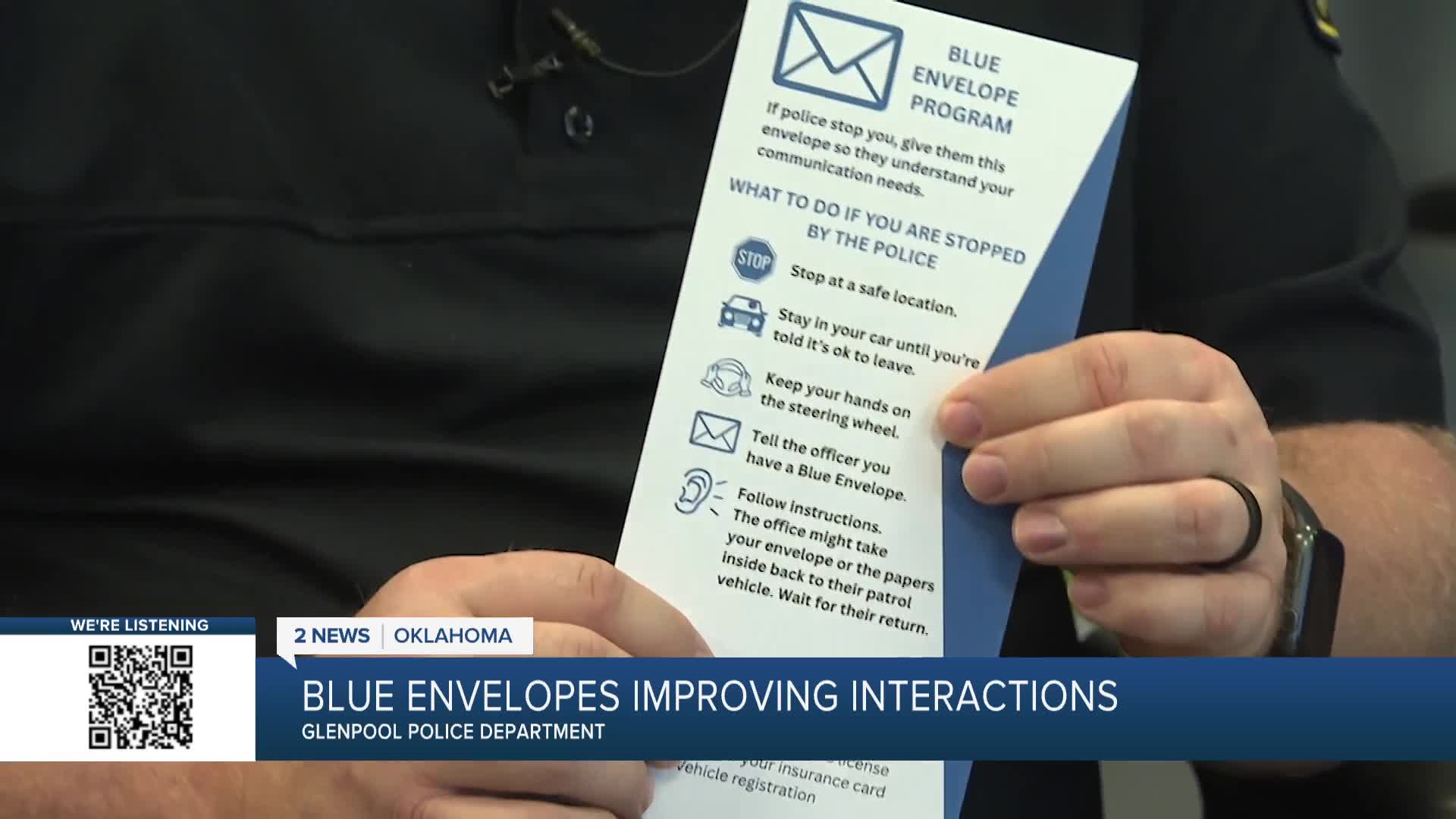


TULSA, Okla — The Blue Envelope program has been designed to help individuals with communication barriers tied to PTSD, Autism, anxiety, and dementia.
Jorden Aldrich is a student at Pathways Adult Learning Center.
WATCH: Oklahoma police departments hoping to make communication easier
She has been diagnosed with Autism Spectrum Disorder.
While she knows how to drive, she doesn’t currently have a car, but is glad to see the program take off for her fellow community members.

“I think all police should know how to help people with disabilities," said Aldrich. "As far as if they nonverbal or if they need help with something.”
Several police departments have implemented the new initiative, including the Tulsa Police Department, the Glenpool Police Department, the Sapulpa Police Department and the Owasso Police Department.
The program allows people with communication barriers to place copies of their IDs, vehicle registrations and insurance inside of the blue envelopes to hand to police officers when they've been stopped.
Glenpool Police Chief Jeremy Plane said he's excited to help more of the community efficiently communicate with law enforcement.
“When the officer asks for your information, you can simply hand them this and not have to have any further communication or dig for anything or any reason to be nervous," he said.

He also said while researching more on the Blue Envelope Program, he found out about another perk people can take advantage of.
All you have to do is request Form 760-A at your local tag agency.
“A lot of the same information can be attached to your license plate," he said. "If a person goes in the tag agency and they request this form, and they fill it out, and they have one of these qualifying events, they have epilepsy, hard of hearing, deaf, autistic communication disorders, things of that nature, it gives officers a warning from the very beginning.”
As for Aldrich, she's glad to see departments taking a step in the right direction.
“I hope it brings lots of awareness for people with disabilities," she said. "As far as being more accepting to them as far as getting a job and non-discrimination against other people, and just accept for people with disabilities for who they are.”
Stay in touch with us anytime, anywhere --
- 2 News Oklahoma on your schedule | Download on your TV, watch for free. How to watch on your streaming device
- Download our free app for Apple, Android and Kindle devices.
- Like us on Facebook
- Follow us on Instagram
- Watch LIVE 24/7 on YouTube
