
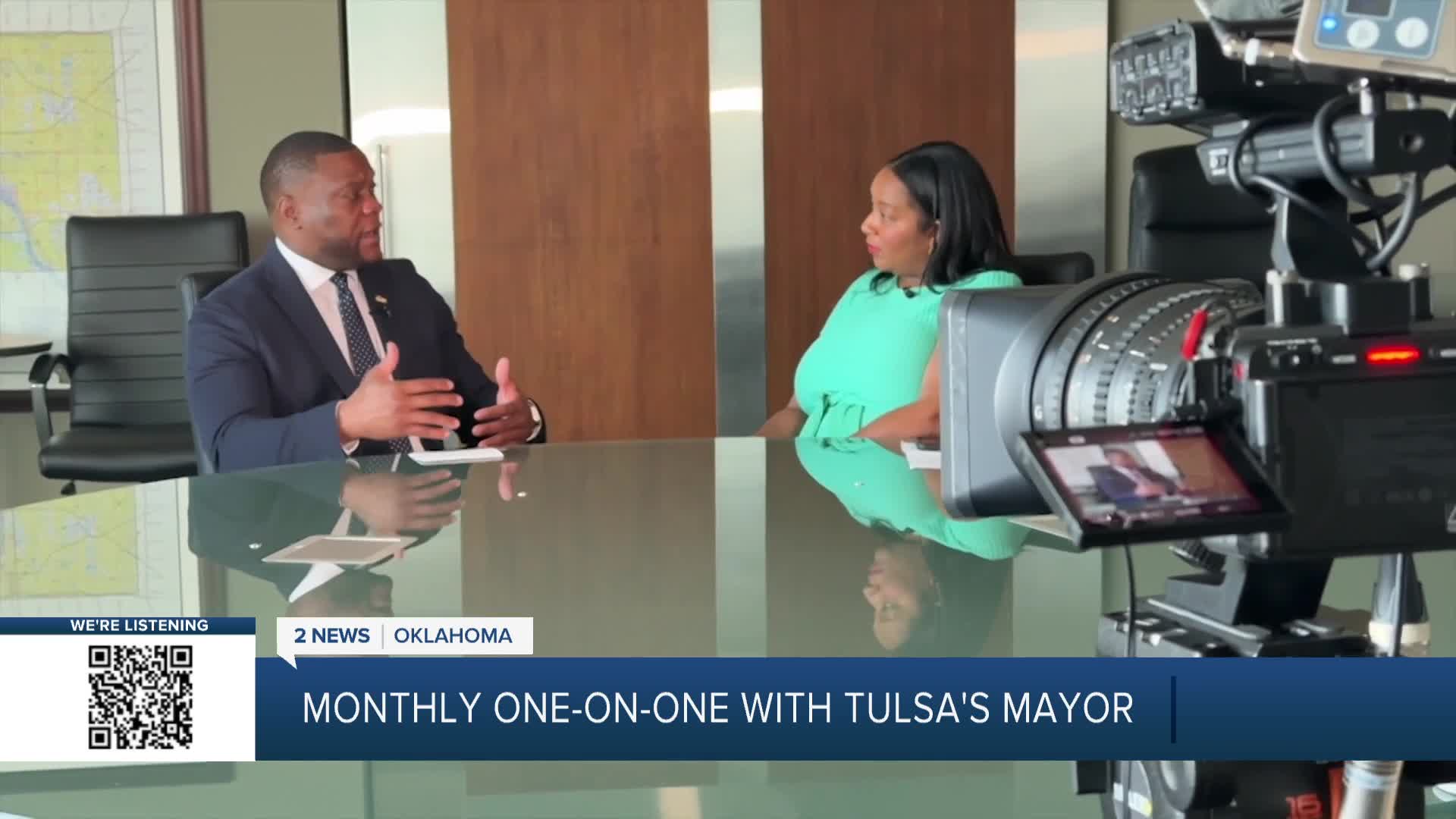


TULSA, Okla. — In our monthly segment with Tulsa Mayor Monroe Nichols, we discuss the city’s response to the winter storm, the budget priorities for 2026, and the increased effort to house our homeless neighbors.
FULL CONVERSATION:
Here is the full interview transcript between 2 News Anchor Naomi Keitt and Tulsa Mayor Monroe Nichols:
NAOMI: I wanted to start by asking about the city mayor retreat that you all had yesterday, and the budgeting process. When I was looking at some of the city councilor's Facebook pages, they said it was a little bit different than it has been in years past. Will you just kind of start by talking to me about that process and what came out of yesterday?
MONROE: I mean, I don't know how retreats were done before I got elected mayor, but my priority is that we actually talk about like real things facing the city. So, if we're going to, you know, uh, really invest in things, we need to make sure we're having open conversations about them, um, and they do have budgetary impacts, you know, this does feed into how we end up spending money. So, we spent the lion's share, the majority of the time yesterday. Talking about homelessness, talking about public safety, two big issues for us, one of which is 60% of our budget, one of which is one that we don't spend enough of our, our, our general fund resources on. Uh, we're funding Safe Move as an example, our home big homelessness initiative. Out of opioid settlement in ARPA dollars and the need to make sure we invest in it was a big reason why I want to make sure we centered the conversation on, on those couple of issues as well as a whole range of others. What I heard from counselors yesterday, um, is that citizens are wanting us to invest more in infrastructure. I heard that citizens are wanting, wanting us to invest more in children and families. Jackie Dutton brought that up yesterday. Uh, I heard that homelessness is obviously something that's at the top of minds for a lot of counselors. And the conversation we started late last year around revenue enhancement, what I heard was in different terms we need to do something about revenue. And so I hope that that is, is a drumbeat that the council takes on as we go through not just the budget process for this next year's budget, but as we think about the long-term financial health of the city.
NAOMI: When you think about priorities for the budget this coming year, what do those look like?
MONROE: Yeah, I mean, public safety is always a big one. Obviously finding ways in which we can invest in our people, uh, so both our sworn and non-sworn employees, can we make sure that people are serving us every day. And I think whether you think about that, like I said in the public safety context or if you think about the winter storm response, uh, city employees are doing an amazing job of, of, of making sure that Tolson's can move about the city safely, uh, making sure their infrastructure is taken care of, and then also represent us well in so many different areas so. Making sure we take care of our people here really is, is, is really critically important. Then obviously like I said, the infrastructure issues are important, finishing the capital projects that uh were promised before I got here and we got a long way to go to get those things done, uh, but really continuing to build on the priorities that we came in with, so. This next year, uh, affordable housing will be top of the agenda. The housing impact fund will be something that will be, uh, implemented and we still are working toward our 6000 affordable units, uh, by 2028. We got a, we got a ways to go, but that's going to be a huge priority for us going into this year. Uh, continuing to lean into the work that we're doing with, uh, our tribal nations, making sure we're making investments in children, youth, economic development, all those things, right, those are my priorities for us this budget year.
NAOMI: You mentioned revenue, that sales tax increase that you were hoping was actually going to be on the ballot here in a couple of weeks. Are you pushing for that still this year?
MONROE: It's, it's critical, right? And just to remind everybody, you know, our sales tax rate is lower than any city our size, particularly given the constraints we have on revenue that we can use for operations in Oklahoma. Um, but it also has really crippled our ability to do the things citizens are asking us to do. Uh, and so the 7/10 of a penny is still something that I think is reasonable. I think voters believe it to be very reasonable, and I think it's going to take a little bit of political courage. But again, if we're going to meet the needs that people are telling us about every day, the needs that councilors identified, uh, just yesterday at the retreat, we're going to have to do things a little bit, a little bit differently. And I don't think we have to think about it in the context of like the old ways we think about tax increases and things like that. This is really about how we're going to invest in the long-term future of this community, us being accountable for every dollar we spend. Uh, I think we've demonstrated even in this budget year, uh, level of budget discipline. I think it's been critically important. The mid-year report show we are, uh, where we are projected to have spent, I think, $6 million in fund balance at this point we've spent 2 million, uh, so it's not where we want to be because we still are dipped into the fund balance, but it's a lot better than, than where we, where we, where we thought we would be. Um, so balancing budget discipline with, you know, revenue enhancement, I think is a smart way to budget and make sure Tulsa's going to be, uh, really healthy for the long term.
NAOMI: I know the city of Tulsa just last week had a massive winter storm. We had this beautiful Christmas and then here we go for a whole week.
MONROE: I knew when it was 72 degrees on Christmas we were going to be in trouble.
NAOMI: We had talked about it for weeks. I'm like we're going to be punished for this. Talk to me about the city's response, what went right and what could be changed?
MONROE: You know, I was really proud of the response. I wrote down a couple of numbers. I think they're important. I want to make sure. I get them right, and I talked about the need to invest in our people. So, um, in response to the winter storm, um, over 40,000 miles driven to treat the streets, almost 7500 gallons of brine applied to the streets, over 5500 tons of salt applied to the streets. Um, we had over 5700 hours worked by the water and sewer team to make sure we addressed breaks and things like that. We sheltered 1100 people to keep them warm and safe out of the cold. The fire department responded to 26 structural fires, and we had over 200 calls for animal services, and we did all those things, and I don't really think that people felt like this was any sort of state of emergency. The people here just did their job and did it well, and I can tell you not long after. Our storm, I was in DC for US Conference of Mayors and love my colleagues in, in Washington DC, but our folks here did a much better job than almost anywhere else in the country, uh, and, and so I was really proud, proud of the response. I'll also note it's always a team effort. Citizens staying home and staying off the streets also helped. We had zero injury accidents, uh, throughout the course of, of the winter storm, which is, I believe, somewhat unheard of. So, we talk about things that went right, a whole lot of stuff went right. It starts with the preparation, um, and then the execution. Things that didn't go well. I mean, I, I think, you know, I, I would like to see us to a place where we can get schools back up and running a little bit quicker. That's a function of some of the neighborhood streets. So, um, and that's really, really tough to do when you think about going across every neighborhood street. Uh, so I would, I would like to see that different. There's nothing we could have done about that, but that was the only thing that didn't go well. We couldn't get, you know, couldn't get kids back. To school quick enough because the temperatures never rose high enough to melt the snow, but, but I was really proud of the response.
NAOMI: There were a couple of slides when I was looking through the retreat yesterday that I wanted to ask you about. One of them said, how do we set the standard as America's safest big city? I know that that was one of your campaign promises. Um, and then meeting the national standards for the safest big city was a goal. Can you talk about what those standards are and then what that conversation looked like surrounding being America's safest big city?
MONROE: There’s a couple of different ways. So, there's a Forbes actually publishes a list of America's safest big cities every year, and they do it, um, through a methodology that actually breaks down, I think, the cost to individual citizen, the cost of crime in, in your community. And they look at that evaluated based on violent crimes, property crimes, uh, vehicular fatalities, and drug addiction, I believe, uh, so things that drive costs, um, but also are good indications on how. Safe people are rather be on the roads or whether it be as it relates to, um, you know, being victimized in some way, shape or form, and I think the drug addiction part of it is a really big one too. So, like those are the, the kind of frontline indicators. And so, as you hear here in Tulsa, which is true, that crime is down in all categories, um, then if we bring in some of the, you know, the, the traffic really and stuff and the drug addiction stuff, that's where we have some of our challenges. So, making sure we're thinking about it in kind of a, you know, well rounded holistic way. is what gets you on that list. And for me, you know, meeting that standard so we see how we are, you know, relative to other cities is really critically important and so um there's a lot of ideas about the tactical things we have to do. Get to our authorized force and things like that, um, but the, the data, um, is driven by violent property crime, violent crimes, property crimes, you know, vehicular fatalities, drug addiction, those types of things.
NAOMI: What do we have to do to get there?
MONROE: So, I mean I think we're uh on a decent track um on the violent crime side. We still need to work on driving it down. Some of the work that we're doing not only with the police department but uh you know, we announced the Community Violence Intervention Program which is really starting to get kicked off now. So, community-based solutions to crime are really important. How we invest. In parts of the community that maybe we haven't invested in as much to revive the economy, the affordable housing work we're doing and getting rid of blight, all those things feed into it, making sure that we got really good lighting on. Places across the community, I think we have to get really serious on the drug addiction side. Some of that will be taken care of in the work that we're doing uh with our unhoused population. So, I think we're doing a lot of the things. The question is, you know, are those things working really, really well? Are they Drive our numbers down and can we, can we basically take those numbers going down and attach it directly to the things that we're doing and that's the reason why we're working with so much data and evidence on, you know, our practices actually the better outcomes for people. But I feel like we're on a good track but you know it's gonna take resources, uh, it's gonna take resources, and I think, um, with the combination of the two, you know, get us up to authorized force from the police department, long term commitment to these community-based interventions, long term commitment to addressing issues of addiction. Uh, long term commitment to making sure that our infrastructure is safe for people to drive, um, you know, you, you start to get there really, really quickly.
NAOMI: I think just finally I know over the weekend you got a chance to participate in a community conversation as it revolved around the budget here. Talk to me about why that was important for you and what role the community plays in having these conversations.
MONROE: The panels on participatory budgeting, uh, so where folks get some agency in how public resources are spent. And the really good thing about doing that is that, you know, there was, I think 3 examples of cities Atlanta, Denver, and New York City. And in those cities they've done. Kind of like smaller examples of it, uh, a million dollars, people are deciding how to allocate that million dollars toward, you know, any number of projects and there's some other examples where the, where the pot may be a little bit bigger. The cool thing about it is the, um, Neighbor conditions index pilot that we launched is actually an example of this participatory budgeting process. So, the neighborhoods that were selected to participate in the pilot. Those neighborhoods worked with our planning team, you know, they looked at all the, the, the things that are impacting, you know, some of the negative trends in the neighborhood and they were making decisions on where they want the city to invest resources to do it. So, the good thing is we have some examples of it. I think making sure we, we can expand that in certain ways to give people some agency in how public resources are spent, uh, is, is important. And so I, you know, I had a good time engaging the other day with a couple of national experts that were there. Um, but I think sometimes it's important to remind ourselves that we are doing some of these things. The question is are we doing them to a degree that people feel it and the fact that there's a lot of people in this community that don't realize that we're doing some of those things, I think is an indication that, that maybe we need to be a little more. Uh, maybe a little more, um, uh, outspoken about these examples of where, you know, the community is able to participate in these, these initiatives.
NAOMI: Is there anything coming up in the city, anything that you guys have working on over the next couple of months?
MONROE: Oh, next couple of months, I hope so, uh. No, I mean, you know, I, I think the, the big thing, um. That's, that's slightly different as you're going to see an even a more aggressive track on the work we're doing around homelessness. So last year, my first year in office, we housed, I think it was 24% more folks than we did the year before as a community, um, but safe move in, in, in principle really didn't get, you know, implemented where we, we were actually starting decommissioning camp until, um, October, November. And so what you're going to see is this, this, this, this rapid numbers of encampments we're beginning to, to, uh, decommission and so I think 2026 is going to be a, a year where you're going to see that, that work ramp up quite a bit and, and there'll be a lot of additional news out about that, um, lots of work that we have going on in our office of health and well-being of children and families. So, I think you're going to see a lot the first part of 2026 on the things that we started last year. Um, that are really starting to catch their stride, uh, this year.
NAOMI: I know when I was at the chamber inauguration the other day, the fact that the city has kind of taken this homelessness mantle, and it seems like a number of different entities are, are deciding that this is an important issue for our city, I think that that's interesting.
MONROE: Absolutely, you know, um, you can't have all the nice things you want in the community unless you take care of the basics. And my belief is, is that it is our job to lead the way on things that are these persistent challenges that makes them public policy issues and this is what we're here for. That then opens up the corporate community to do visionary things that are going be, that's how the city was built, um, you know, they, these, these corporate titans were able to do visionary things and us as a partner. It's not their job to Solve homelessness and I think we sometimes have said oh it's for nonprofits and the corporates, they're partners, but that's our problem. Um, working less on these big visionary projects I think is where we can partner but we gotta take care of the basics. Our job is taking care of the basics and I, and I, and I can appreciate the fact that we're not looking past the things that are hard, we're doing those, but we're also, you know, also setting our eyes on the big things in the future, so we're excited about it.
Stay in touch with us anytime, anywhere --
- 2 News Oklahoma on your schedule | Download on your TV, watch for free. How to watch on your streaming device
- Download our free app for Apple, Android and Kindle devices.
- Like us on Facebook
- Follow us on Instagram
- Watch LIVE 24/7 on YouTube
