



TULSA, Okla. — Green Country is beginning to turn more yellow, orange, red and brown. Fall foliage is readily showing up now that we are just a few weeks away from peak time frame. Here is what tends to drive the time and vibrancy of the leaf color changes.
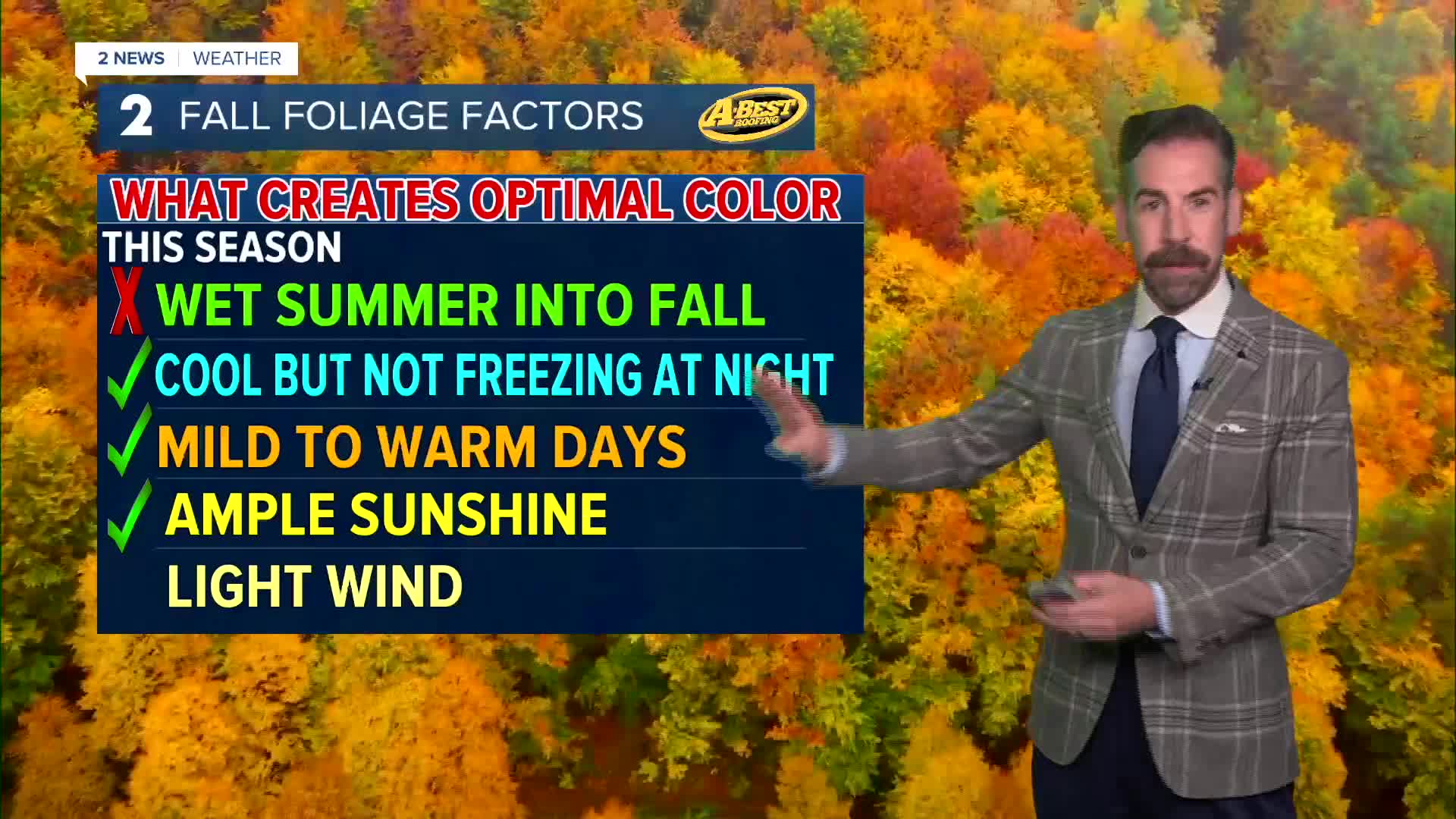
One of the biggest factors for the brilliance of the fall colors is how wet it was over the summer into the first portion of fall. This just happens to be when Oklahoma fell into significant drought. Dry conditions stress trees and can even cause premature leaf drop. Wet soil for the trees leading up to the fall is therefore favored.
Cool nights and warm, sunny days during the fall help to generate more of the sugars that create the fall colors in the leaves. While it has been unseasonably warm for much of autumn so far, the recent trend of cool nights is helping to trigger the color change. We have had no shortage of sunshine and warmth during the days. This will help improve the color this season, especially since temperatures have remained above freezing. A frost can cause leaves to be damaged and wither.
The very warm fall so far is the biggest driving factor in the delayed fall color. In fact, peak foliage will not likely occur until mid-November. This one to three weeks later than average. For leaf peepers, the second full week of November may the best time to check out the color north of Tulsa and near the Arkansas border. From Tulsa southward through the Ouachita Mountains, the third week of November may be best. Keep in mind, much of southeast Oklahoma has been even drier, which will mute leaf colors in the more traditional viewing areas.
How long the fall colors stay on the trees is really dependent on precipitation and wind, which both create bursts of leaf drop. The lighter the winds and precipitation stays through peak season will determine how long we get to enjoy the fall colors this year.
For our latest 2News Oklahoma forecast, click here.
 Facebook
 TikTok
 YouTube
 Instagram
 Threads
 X
