

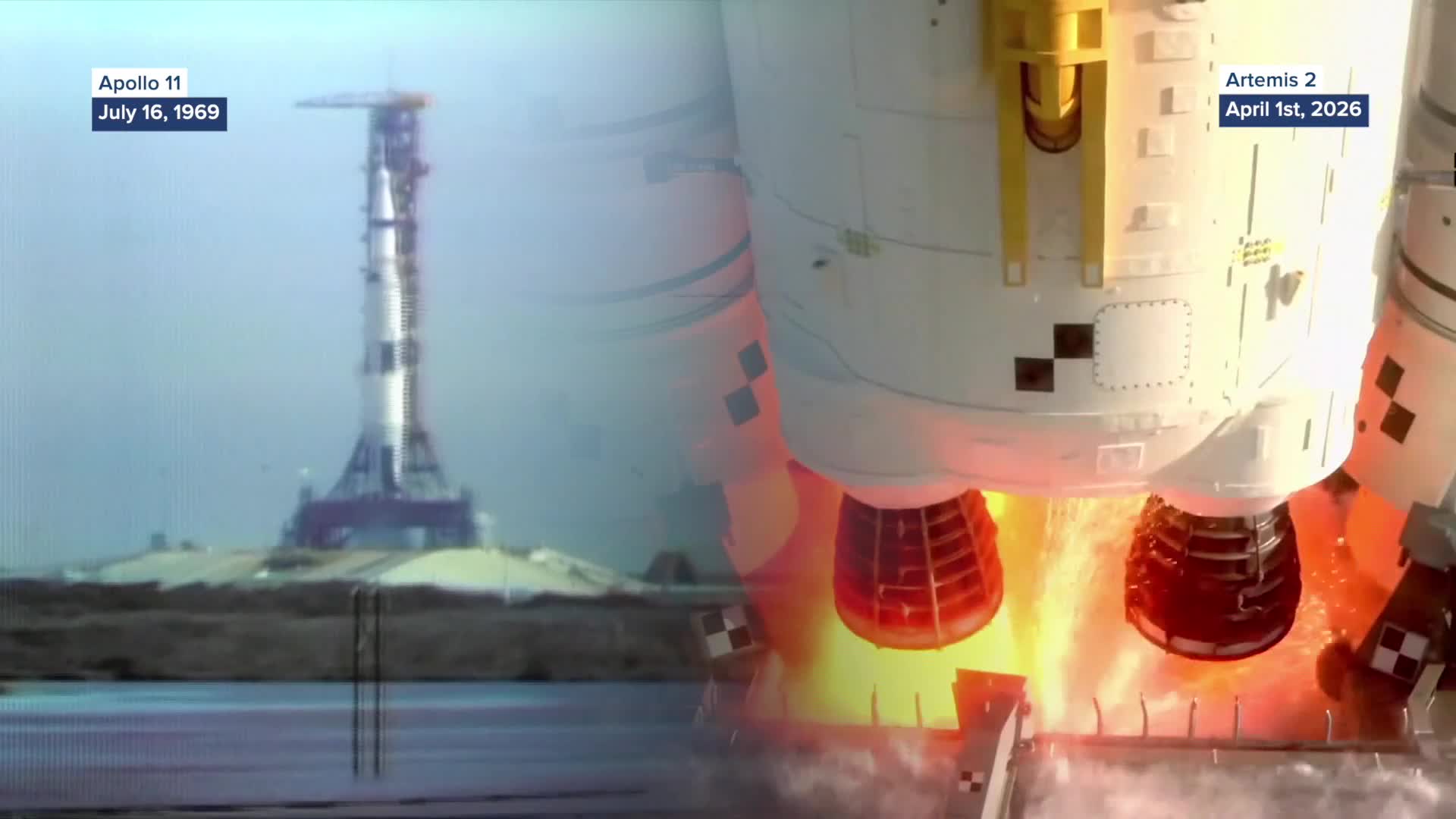


CAPE CANAVERAL, FL. — NASA on April 1 launched Artemis II, a mission that will take four astronauts in a lap around the moon, farther from Earth than any humans before them.
Liftoff proceeded according to plan, NASA says. The rocket's first stage performed as expected and its booster engines and core stage separated on schedule.
There is an Oklahoma connection to Atermis II, as parts were assembled and built in Stillwater at Frontier Electronics. At least 20 key pieces of the Space Launch System (SLS) and the Orion spacecraft on board the rocket that made the feat possible came from Frontier.
WATCH: ROCKET SCIENCE: Stillwater company sending Artemis II parts to the Moon and back:
"From the very tip of the launch abort system, all the way down to the thruster at the bottom of the SLS rocket, there’s electronics all over it that we build here in Stillwater, Oklahoma,” Frontier Electronic Systems program manager Darryl Smith told 2 News on March 30.
WATCH: ARTEMIS II: NASA launches historic mission around the moon:
The spacecraft is now in orbit around Earth, ready to enter its trajectory toward the moon. It will take several days for the mission to reach lunar orbit.
“We have a beautiful moonrise," mission Commander Reid Wiseman told ground control following the launch. "We’re headed right at it."
The crew includes astronauts Reid Wiseman, Victor Glover and Christina Koch, along with Canadian Space Agency astronaut Jeremy Hansen.
The mission has several key objectives, according to Lakiesha Hawkins, acting deputy associate administrator for NASA’s Exploration Systems Development Mission Directorate.
IN CASE YOU MISSED IT | NASA announces ambitious plans for a space station on the moon
Those include testing spacecraft systems and life-support capabilities in a crewed environment, assessing astronauts’ ability to maneuver the spacecraft, and conducting rendezvous and docking demonstrations to prepare for future lunar landings.
“It’s about a 10-day mission, and we are looking to open up the door to the age of Artemis," Hawkins said.
The launch comes after relatively minor setbacks: NASA had to troubleshoot to ensure that commands would reach the spacecraft's flight-termination system, which would have allowed a self-destruct if the rocket left its course and posed a threat to people on the ground.
WATCH: NASA launches Artemis II mission:
Once in space, Hawkins said the spacecraft will need to achieve a stable Earth orbit 24 hours after launch. The spacecraft will then perform a burn using its propulsion system and the moon’s gravity for assistance.
As it travels behind the moon, Earth will briefly lose contact with the crew during a short communications blackout.
"When they get on the backside of the moon, there will be a perspective that no human eye has ever seen before," Hawkins said.
After a lunar “slingshot” maneuver, which uses the moon’s gravity to propel the spacecraft back toward Earth, NASA will position the capsule for splashdown off the California coast.
The last time NASA sent astronauts to the moon was Apollo 17 in 1972.
Stay in touch with us anytime, anywhere --
- 2 News Oklahoma on your schedule | Download on your TV, watch for free. How to watch on your streaming device
- Download our free app for Apple, Android and Kindle devices.
- Like us on Facebook
- Follow us on Instagram
- Watch LIVE 24/7 on YouTube
