

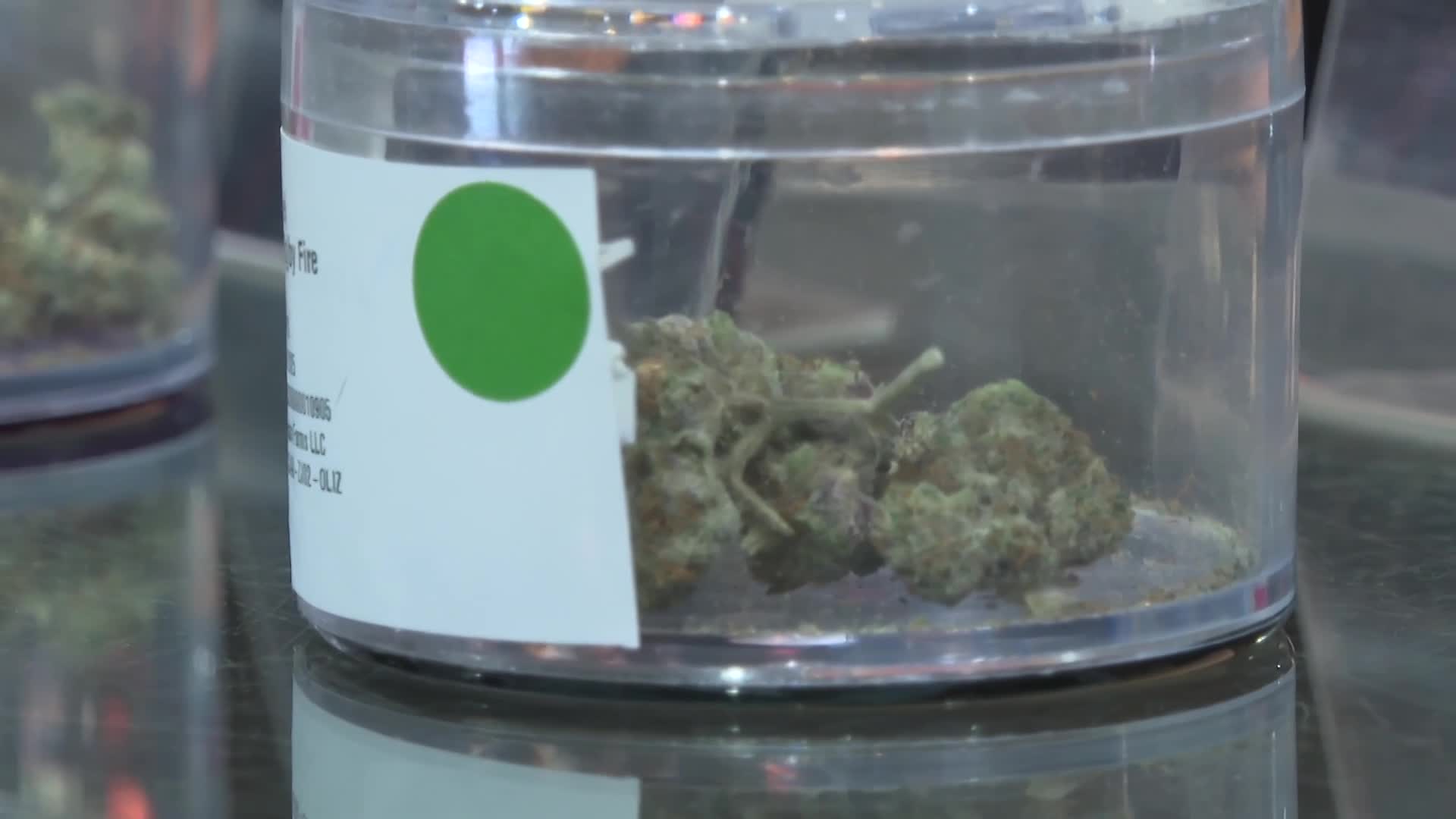


TULSA, Okla — President Donald Trump signed an executive order reclassifying marijuana from a Class 1 drug to a schedule 3 drug.

President Trump reclassifies marijuana, making it easier for medical use
While there hasn't been too much information released about what this means for legal use, some dispensary owners are hopeful this could be a good thing for business, but are aware of some downsides, too.
Spanky is the owner of the Gold Standard dispensary company.
WATCH: Dispensary owners react to executive order reclassifying marijuana
He’s opened up two locations in Tulsa, but it afraid his success could all be for nothing.
“A lot of people worried about their jobs, worried about the industry being shut down, especially shops like mine that are mom and pop stores," he said. "That you'll only be able to get your medicine at Walmart or CVS or big pharmaceutical companies that are supposed to take come over, take over.”

However, he’s heard the executive order could possibly help the cannabis industry move forward.
“With this opening up, we're hoping that maybe it opens it up for we get business loans, or we can file taxes differently," he said. “Right now, we can't have a bank account unless we go to particular banks that will do the extra paperwork, take the extra steps because of FDIC. So it kind of limits us on what we can do, as far as getting loans or anything."
Mango Cannabis is a national chain that has several locations in Tulsa.
Mango Cannabis’ co-owner Mike Khemmoro is hopeful the new law could help boost the economy.
He sent a statement stating "operators also pay what many in the industry refer to as hidden green taxes. These are premiums embedded into insurance, banking, payments, advertising, security, and professional services simply because of federal classification risk.”
He continued to state that while the reclassification would not eliminate those costs overnight, it would remove the primary justification for them, which could lead to more people entering the industry.
He said as that happens, pricing pressure follows, and costs begin to normalize the same way they do in any other regulated industry.
His full statement is below:
The most immediate impact of rescheduling would be normalization across the cost structure of the cannabis industry. Beyond the well known 280E tax burden, operators also pay what many in the industry refer to as hidden green taxes. These are premiums embedded into insurance, banking, payments, advertising, security, and professional services simply because of federal classification risk.
Reclassification would not eliminate those costs overnight, but it would remove the primary justification for them. Risk clarity invites competition. As more service providers are willing to enter the space, pricing pressure follows and costs begin to normalize the same way they do in any other regulated industry. That relief would likely be felt on the expense side first. Revenue upside will depend more on how federal and state laws ultimately align, particularly around new markets and the unresolved issue of intoxicating hemp products.
Still, nobody truly knows the full story.
“It’s really confusing and we just really need to know what the deal is," said Spanky. “What is what are we doing? And just with no one knowing anything, and no one giving any answers, we're just hearing a lot of this and that from everyone.”
Stay in touch with us anytime, anywhere --
- 2 News Oklahoma on your schedule | Download on your TV, watch for free. How to watch on your streaming device
- Download our free app for Apple, Android and Kindle devices.
- Like us on Facebook
- Follow us on Instagram
- Watch LIVE 24/7 on YouTube
