

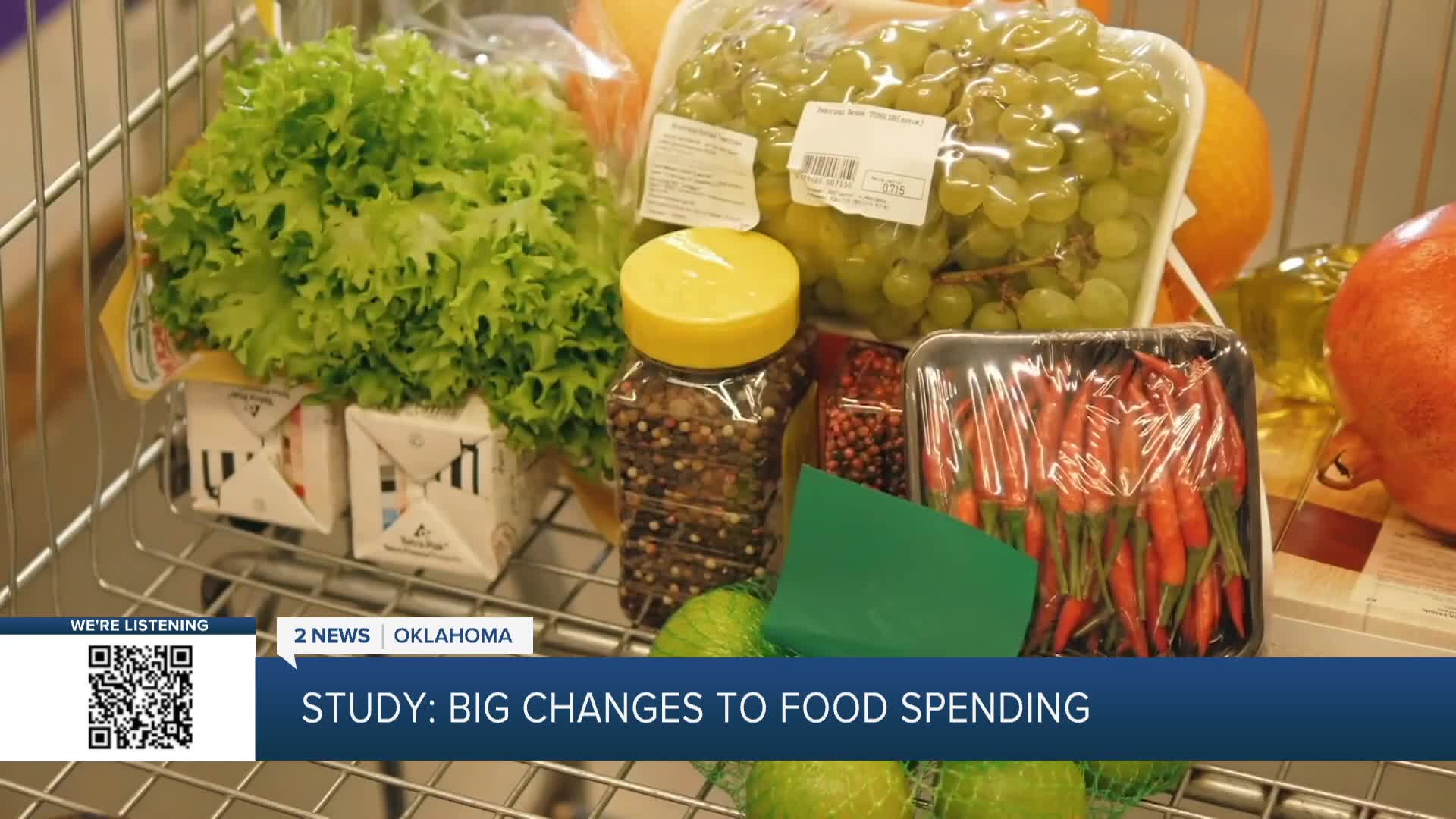


TULSA, Okla. — Rising food costs are forcing nearly all Americans to change their grocery-shopping and dining-out habits.
Nearly half of Americans are struggling to afford food, prompting a massive shift in how people shop for groceries and dine out, according to a new LendingTree study.
The study found 49% of Americans are struggling to afford food.
This includes 22% of low-income households, 19% of Generation Z, 18% of millennials, and 17% of parents with young children who say affording food has become very difficult.

Even 57% of high-income households felt concerned about paying for groceries in the past month.
"Nearly half of Americans are struggling to afford food, and even higher earners are feeling the pressure," Schulz said.
Schulz is the chief consumer finance analyst for LendingTree.
"That shows up in everyday choices, from groceries to dining out, and it’s a clear sign that budgets are stretched thin," Schulz said.
The study shows nearly 90% of Americans have changed their grocery habits. The data shows that 30% are watching prices more closely, 24% are cutting back on splurge items, 23% are reducing food waste, and 23% are choosing store or generic brands.

Lizzy Bradford is one of the many shoppers making adjustments.
"I definitely shop less than I did," Bradford said.
"I do grocery shopping much more meaningfully now than I did previously, so I plan it more," Bradford said.
Bradford used to shop multiple times a week, but rising costs have changed her routine.
"I go to Costco once every two or three weeks and get the majority of items, and then periodically just a smaller grocery store," Bradford said.
"I’m more meaningful in what I’m purchasing than that decreases the amount that I’m spending and that I’m wasting at the end of the day," Bradford said.

Nayeli Moreno also changed her approach to the supermarket.
"Meal planning, making sure that I have a list of everything I want, cook essentially for the week using the same ingredients," Moreno said.
"And then I kind of sometimes check the prices at different stores," Moreno said.
"So, I stopped going to Target a lot just for funsies, and I just go to Walmart or Aldi," Moreno said.
Moreno is also part of the demographic that sometimes switches to generic or store brands to save money.
"I used to choose a certain brand, but now I choose other brands," Moreno said.
The LendingTree study found 22% of low-income households are buying fewer groceries, and 18% of Americans are shopping less often.
"What we found is that the cost of food is really forcing people to struggle a lot right now," Schulz said.
The financial strain extends beyond the grocery store. The study also found 84% of Americans have cut back on restaurant spending.
The data shows that 39% of people are eating out less, 25% are paying more attention to menu prices, and 22% are choosing cheaper restaurants or fast food. Additionally, 25% of Americans say they are tipping less.
This story was reported on-air by a journalist and has been converted to this platform with the assistance of AI. Our editorial team verifies all reporting on all platforms for fairness and accuracy.
Stay in touch with us anytime, anywhere --
- Download our free app for Apple, Android and Kindle devices.
- Sign up for daily newsletters emailed to you
- Like us on Facebook
- Follow us on Instagram
- Watch LIVE 24/7 on YouTube
