

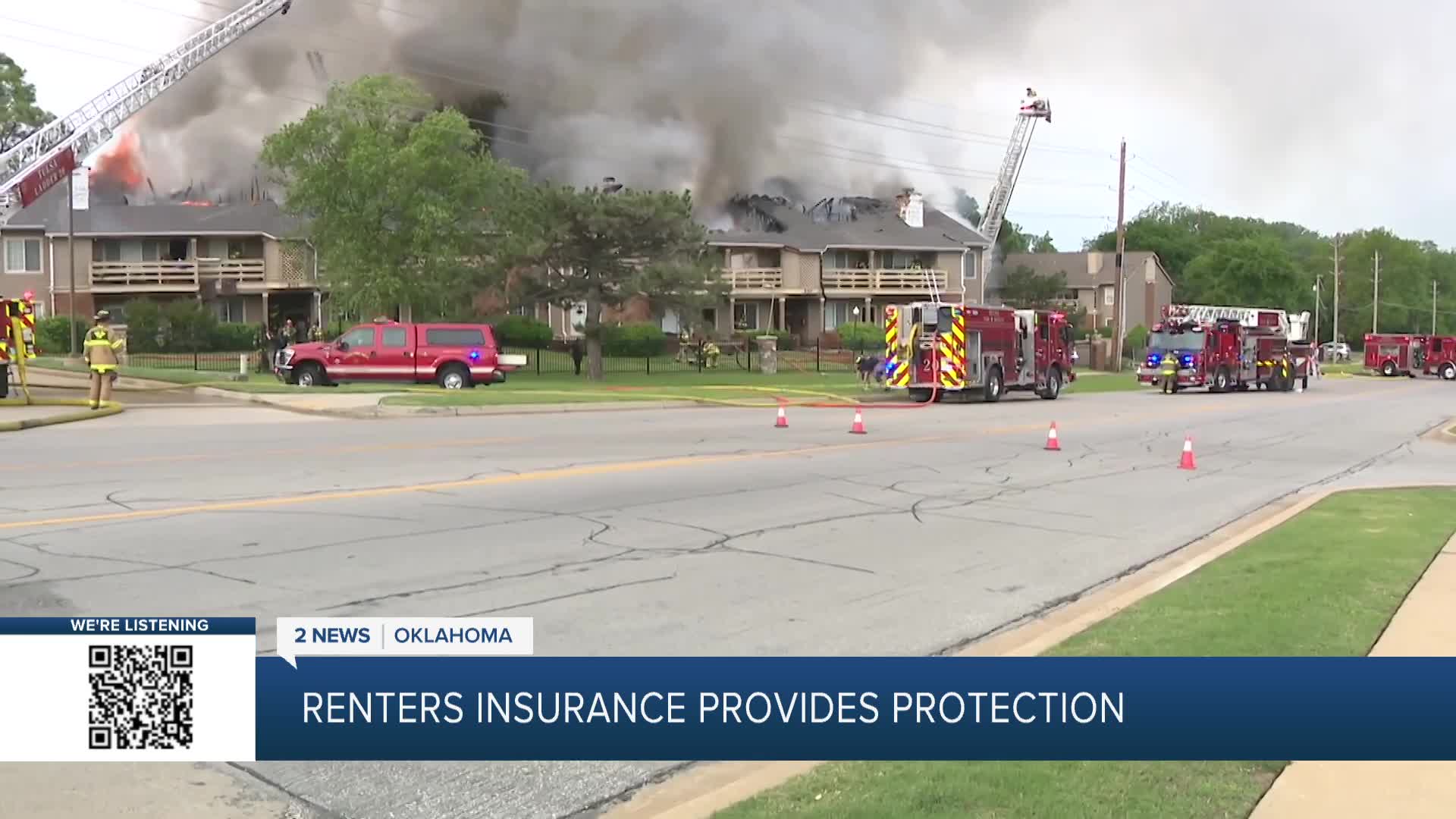


TULSA, Okla. — Fewer than 1 in 3 renters in Oklahoma carry insurance to protect belongings, liability, and temporary housing costs after a fire or other disaster, according to the Oklahoma Insurance Department.
A major fire at the Sheridan Pond Apartments in Tulsa is a reminder of how quickly renters can lose everything.
It's also a reminder that one monthly expense can make recovery less painful.

Elliott Harris woke up to firefighters banging on the door, telling him to get out.
Tulsa City Councilor Phil Lakin, who represents District 8, said the scale of the disaster was significant.
"We could have, what, 16 to 32 families that are affected. Depending on how many units end up being within this fire area, so you know this is pretty rare. There's going to be people in these buildings, probably, that don't have insurance, that have lost a lot or all of what they had."
According to the Oklahoma Insurance Department, fewer than a third of renters have renters insurance, a critical tool to recover from fires and other disasters, including severe weather.
According to Progressive, the average cost of renters insurance in Oklahoma is just over $22 a month.

What renters insurance covers and what it doesn't
Many renters assume their landlord's insurance covers their belongings. It doesn't. A landlord's policy only covers the building's structure, not tenants' personal property.
Renters insurance covers:
- Personal belongings damaged or destroyed by fire, theft, or other covered events
- Liability if someone is injured in your home
- Additional living expenses if a fire or other disaster forces you to temporarily relocate

Steps to take before disaster strikes
Having insurance is only part of the equation. Taking a few simple steps before a disaster can make the claims process faster and more accurate.
- Make a video inventory. Walk through your home or apartment and record your belongings on your phone. Narrate what you see, including brand names and approximate values.
- Store it in the cloud. Saving your video inventory to a cloud storage service means you can access it even if your phone or computer is lost or damaged in a disaster.
- Document high-value items. For electronics, appliances, and other expensive items, note the serial numbers and keep photos of receipts, if possible.
A thorough home inventory helps insurance companies fairly settle claims and can speed up the process of getting reimbursed after a loss.
This story was reported on-air by a journalist and has been converted to this platform with the assistance of AI. Our editorial team verifies all reporting on all platforms for fairness and accuracy.
Stay in touch with us anytime, anywhere --
- Download our free app for Apple, Android and Kindle devices.
- Sign up for daily newsletters emailed to you
- Like us on Facebook
- Follow us on Instagram
- Watch LIVE 24/7 on YouTube
