

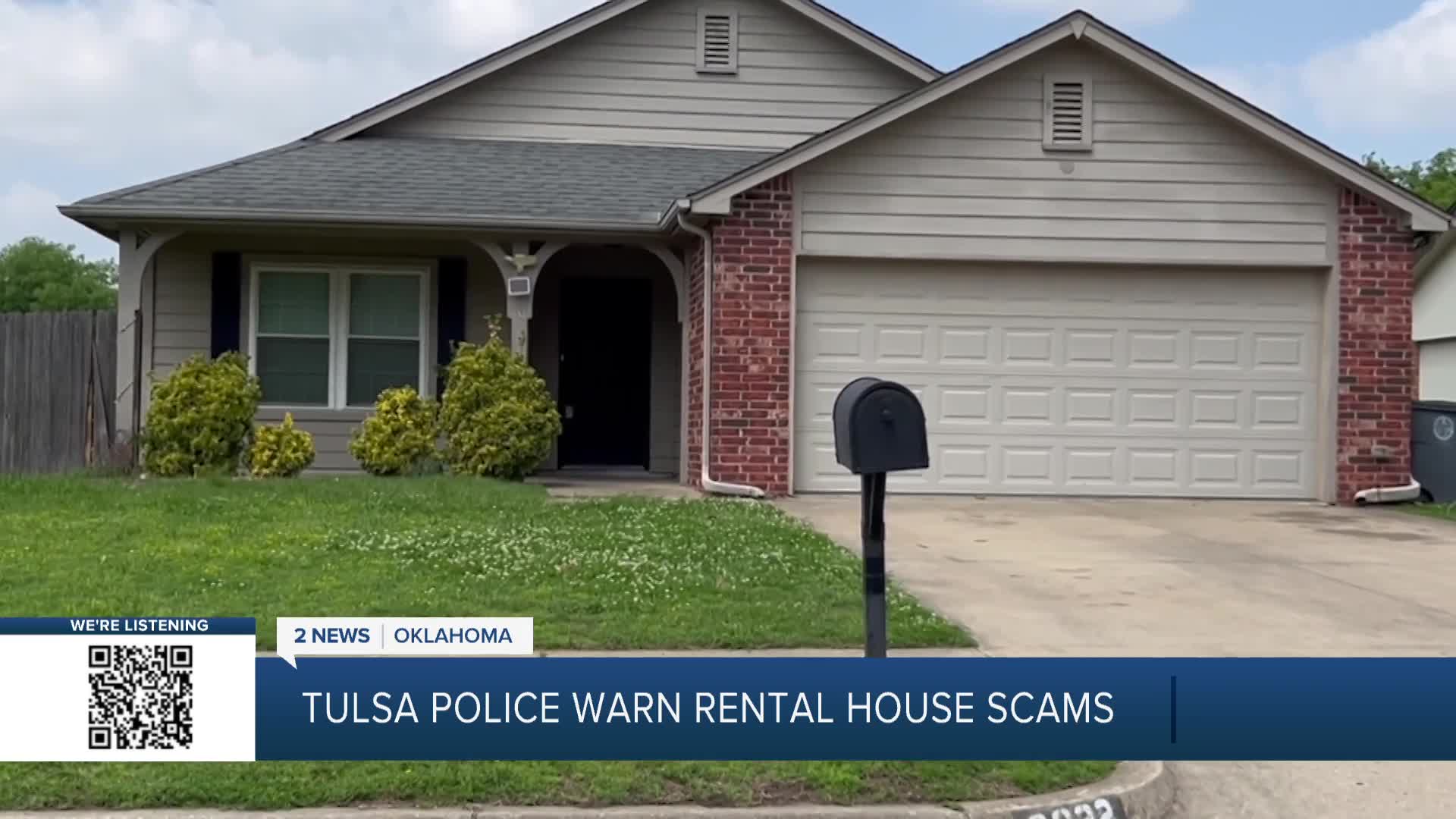


TULSA, Okla. — A new twist on rental house scams is in Tulsa, and it can cost victims thousands of dollars.
The Tulsa Police Department warned renters about an increase in rental property scams, including a new tactic in which scammers use compromised lockbox codes to make fake rental listings appear legitimate.
Elizabeth Trammell spent weeks looking for a new rental property for her family of 10. A house caught her eye. She told 2 News Oklahoma she thought George Israel owned the house. She never met him in person, only communicating by phone and online to complete the rental application he sent.
Trammell believed everything at first.
"Well, there was a red flag, I believe, when he asked for the payments. He asked for them through Cash App," Trammell said.
Trammell sent nearly $6,000 through the app to cover the first and last month's rent and deposits. When she arrived to move in, someone changed the locks.
"We tried to call the gentleman. No contact, nothing from him at all, so we started to get worried that maybe this was not what it sounded like," Trammell said. "So, my brother-in-law actually looked up the house, and we found out that it was not owned by the gentleman that we had been talking to."

According to the Tulsa County Assessor's Office records, the property is owned by a company with a Tulsa doctor as registered agent. 2 News reached out to that person to ask if Israel is authorized to rent out the house, but has not heard back.
2 News also called Israel three times to ask if he owned the house or represented it. He hung up on us.

Lt. Andrew Weeden with the Tulsa Police Department's Financial Crimes unit investigates these cases.
"The Tulsa Police Department has seen an increase in rental property scams," Weeden said.
Weeden said scammers often steal photographs of legitimate rental properties from Zillow and create duplicate listings on third-party websites, including Facebook Marketplace or Craigslist. When victims inquire about the ads, the scammers communicate exclusively by phone or over the internet.
Until recently, a major red flag was that the person behind it would make excuses for why they could not meet the prospective renter in person or let them into the property. Now, scammers are finding ways to provide access.
Weeden said scammers are obtaining lock box codes, often from homes or rental houses under renovation where multiple contractors have access. The scammers give the victim the code, allowing them to tour the property alone and lend the listing an air of legitimacy.
"Ultimately, what's happening is they're touring a property that's really not for rent by the person that they're talking to," Weeden said.
The next big red flag occurs once the victim decides to rent the house. The scammer insists on payment only through online platforms like Cash App, Zelle, or Venmo. These sites offer very little ability to claw back money once it is sent.
When the victim shows up to move in, they find the locks changed or the actual owners or renters are living in the house.
Weeden said these cases are difficult for law enforcement to track because the scammers often live out of state, such as in California or New York, and conduct the entire scheme over a computer. This puts them outside Tulsa's jurisdiction.
"If you're looking to rent a property, never send money until you've seen the property in person and you've met the property owner in person," Weeden said.
Weeden also recommends checking the Tulsa County Assessor's website to verify who owns the property. If the name on the property records does not match the person trying to rent the house to you, that is another major red flag.
Once Trammell realized she had likely been tricked out of her money, she filed a crime report with the Tulsa Police Department and the FBI's Internet Crime Complaint Center (IC3).
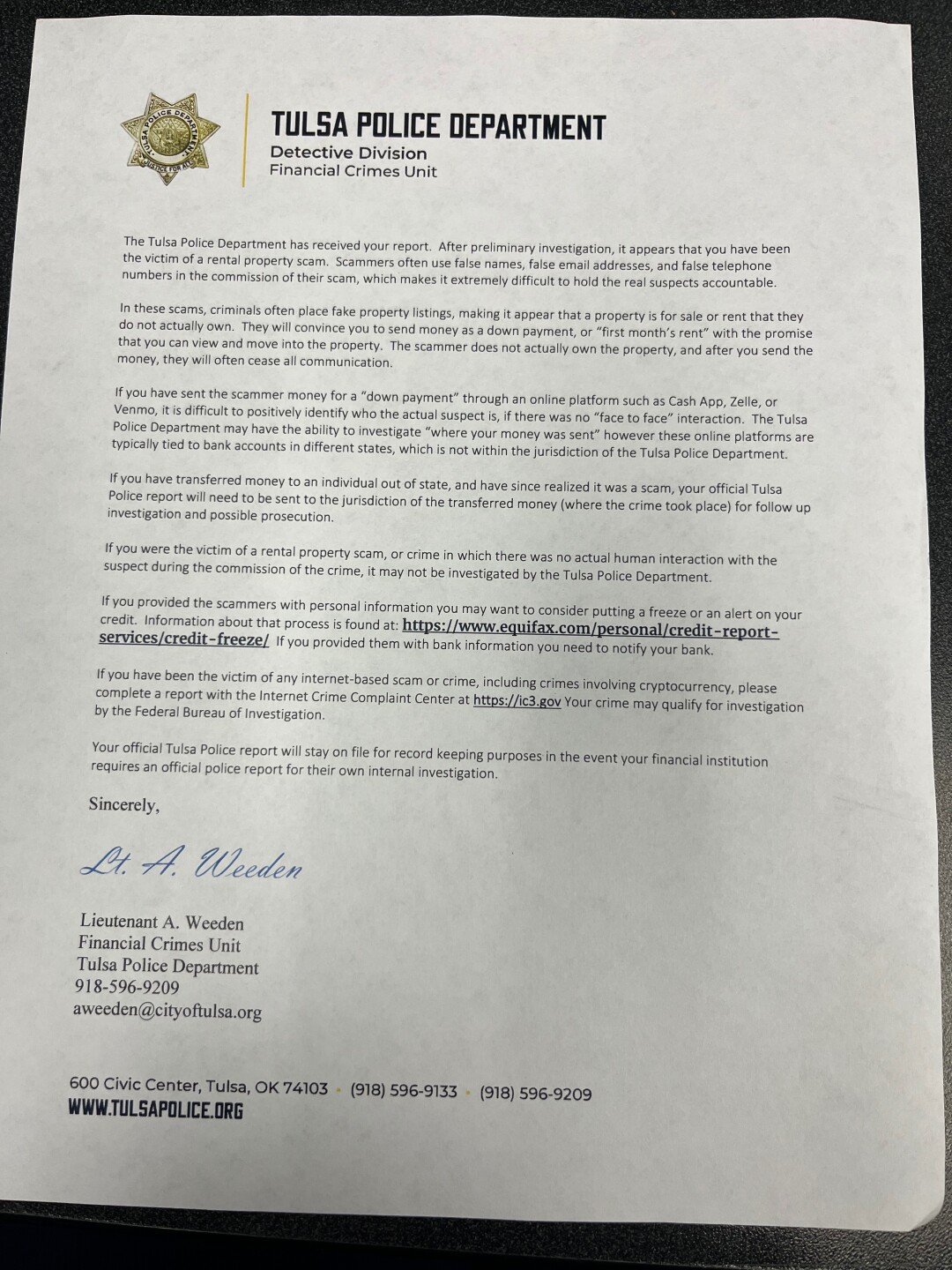
Weeden recommends doing both if you see a suspicious rental ad, even if you haven't fallen for it or lost money. He provides this letter to potential victims.
Trammell wants to warn others not to be as trusting as she was because, along with losing her hard-earned cash and delaying her family's ability to move into a new home, she also provided a person she's never seen with her personal information that can be used for identity theft.
This story was reported on-air by a journalist and has been converted to this platform with the assistance of AI. Our editorial team verifies all reporting on all platforms for fairness and accuracy.
Stay in touch with us anytime, anywhere --
- Download our free app for Apple, Android and Kindle devices.
- Sign up for daily newsletters emailed to you
- Like us on Facebook
- Follow us on Instagram
- Watch LIVE 24/7 on YouTube
