



TULSA, Okla. — Artificial intelligence is making it harder to spot scams, but a linguistics researcher says patterns in scammer language behavior can still give them away.
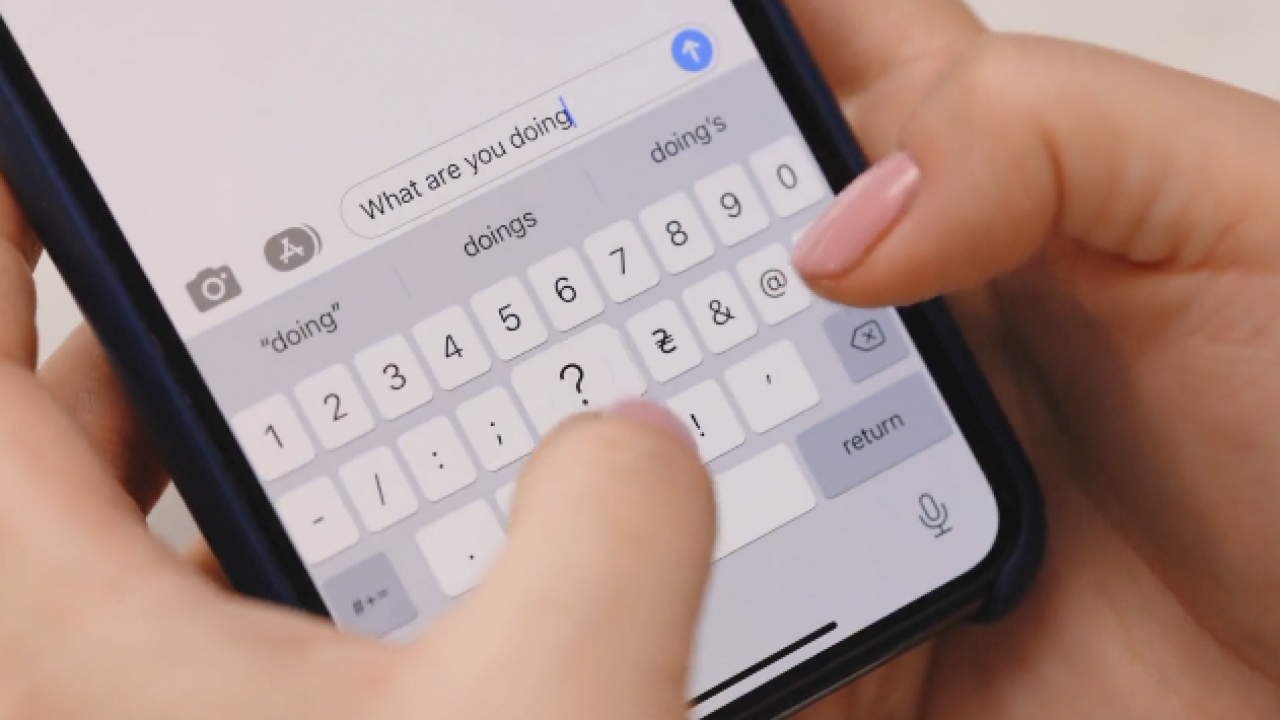
Text messages, emails, and social media messages are among the most common ways scammers target consumers.
According to the Federal Trade Commission, losses from social media-originated scams alone shot up eightfold between 2020 and 2025.
F-Secure Intelligence reports 56% of Americans experience scam attempts at least once a month.

"It's scary," Sarah Sparks said.
Many of those scam attempts use artificial intelligence to trick people into believing something is real when it isn't.
"I think it's harder on Facebook. It's really hard to tell, even on TV, but they'll say AI-generated images, but it's so hard to tell at this point," Sparks said.

Dr. Miriam Jimenez Bernal, at Schiller International University, studies the language scammers use and how they use AI to deceive people about who they are communicating with.
"Now with artificial intelligence, it's even easier because they can give them prompts to make it sound like it's a 14-year-old girl or a 40-year-old man," Jimenez Bernal said.
Scammers also use AI in written communications. Jimenez Bernal says some patterns give them away, especially with romance scams.
"They have very distinctive patterns, and the type of narrative that they use is usually the same," Jimenez Bernal said.
For instance, when she interacted with suspected scammers, they often asked probing personal questions.
"They were asking the same questions, like, 'Do you have a husband? Do you have a partner? Do you want one? Are you looking for the love of your life?" Jimenez Bernal said.
That is often followed by an attempt to move the conversation to a different platform.

"There is a moment when they say, 'Oh, I like you so much, I would like to continue having conversations with you. Should we change? Give me your Gmail," Jimenez Bernal said.
"It's a big red flag," she said.
Jimenez Bernal says those messages are typically followed by links that the scammer wants you to click.
Sparks worked in IT. She told 2 News Oklahoma it made her wary of anyone asking her to click on links.
"I just don't click on anything," Sparks said.
Jimenez Bernal says that instinct is smart because clicking those links can have serious consequences.
"You might end up in a trap, and if they have access to your account, they could impersonate you, they could use it to start sending emails to people that you know," Jimenez Bernal said.
Clicking a link might also give scammers access to your devices and cloud storage.
"If you have a Gmail account, you probably have also Google Drive, so you've got your pictures there, and you don't know what they can do with all that data. So, that is, uh, I think that is a very huge risk," Jimenez Bernal said.
To protect yourself:
- hang up on suspicious callers and block the number
- do not reply to suspicious emails or texts
- delete suspicious text messages & emails and report it as spam.
- If you are a victim of one of these schemes, report it to local police, the FTC at ReportFraud.ftc.gov, and the FBI at ic3.gov
This story was reported on-air by a journalist and has been converted to this platform with the assistance of AI. Our editorial team verifies all reporting on all platforms for fairness and accuracy.
Stay in touch with us anytime, anywhere --
- Download our free app for Apple, Android and Kindle devices.
- Sign up for daily newsletters emailed to you
- Like us on Facebook
- Follow us on Instagram
- Watch LIVE 24/7 on YouTube
