

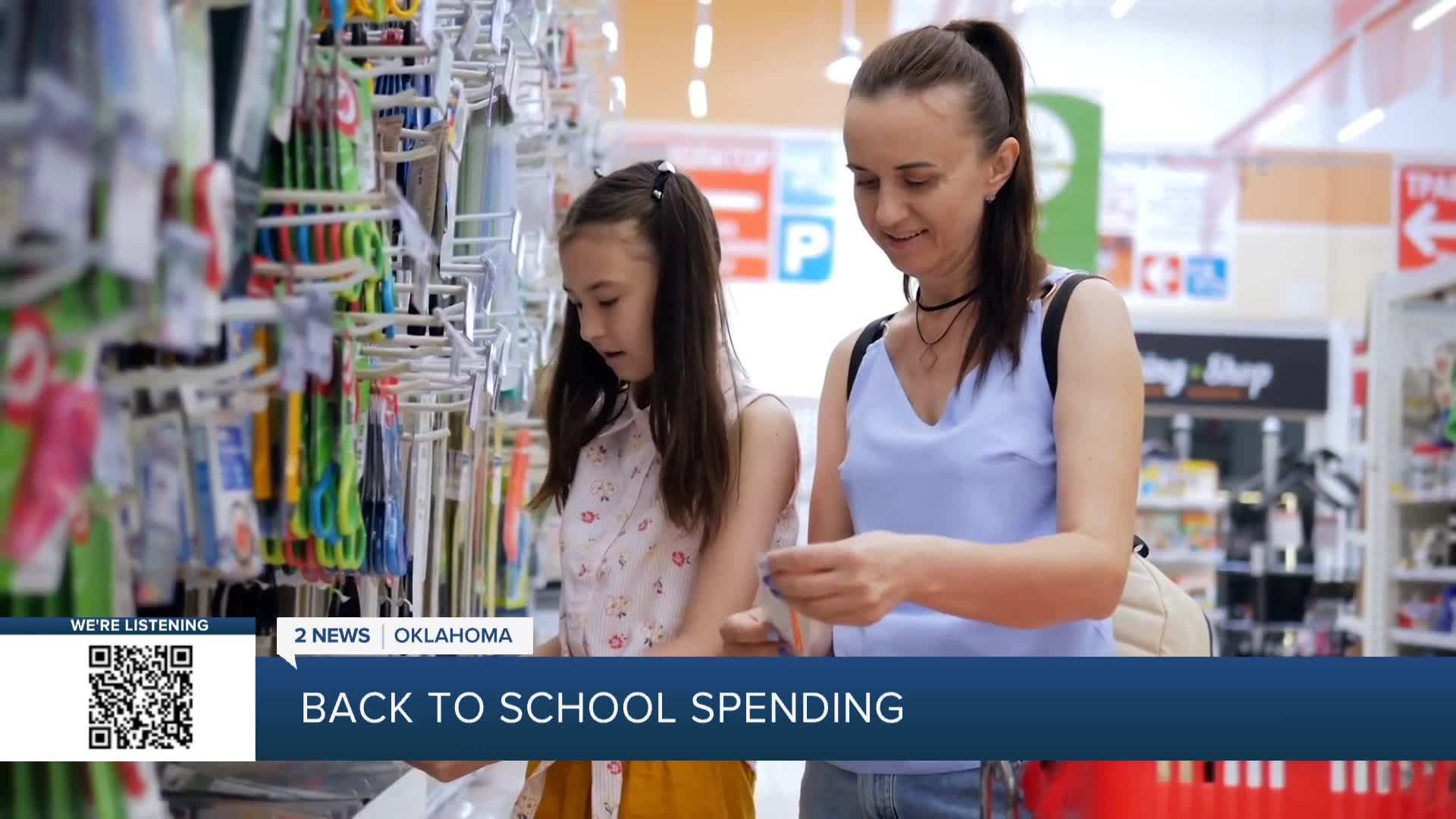


JENKS, Okla. — Back-to-school shopping is more than a single August trip to the store, and for many families, the price tag is growing.
Andy Williams sees it firsthand.

kjrh
"This year's a lot more expensive because I'm going to college," Williams said.
Williams showed 2 News Oklahoma her new backpack, designed to hold the pricey tech she needs for school.
"I got an Apple Mac and an iPad, I got them on discount because of my dad, but it was in total about $2000," Williams said.
A new survey from RetailMeNot shows families changed how they approach back-to-school shopping.
"Back to school stopped being a trip, and I think what we really see is this has completely turned into a season," Stephanie Carls said.
- 46% of shoppers plan to begin by July
- 12% shop year-round
Clothing overtook school supplies as the top purchase category this season.
Nearly half of shoppers, 48%, plan to buy clothing and shoes, compared to 43% purchasing school supplies. Backpacks and accessories account for 34% of planned purchases, followed by health and personal care at 25% and electronics at 23%.
Shoppers expect to spend an average of $324 per grade-school student, $454 per high-school student, and $541 per college student this year, according to RetailMeNot.
Shoppers at Tulsa Premium Outlet Mall focus on value.
"We're seeing a lot of basics on the list for this year. People wanting to get the most value for their dollar and looking to maximize their back-to-school budgets this year," Hannah Daab said.
Tariffs and rising prices concern 24% of shoppers, and the impact they have on back-to-school budgets, according to RetailMeNot.
A separate Bankrate survey shows 49% of shoppers plan to buy cheaper brands, looking for deals, budgeting, or buying fewer supplies — for the upcoming school year.
- 30% of shoppers are changing how they shop due to inflation
- 20% of shoppers feel a strain on their budget
Even shoppers who plan ahead can get hit with unanticipated expenses. Carls said the key is to resist the urge to buy everything at once.
"Always remember that you don't have to buy the whole school year in one single trip," Carls said.
Williams uses a deliberate approach to her own shopping, "My kind of shopping is I take my time. I kind of, I've been researching since I graduated in May, so I'm being very mindful."
How to save on back-to-school shopping
Experts recommend shopping in phases.
Buy first-day essentials like backpacks, school supplies, and properly fitting shoes early, then wait on items that can be purchased after school begins, when needs — and often prices — become clearer.
Jackets, hoodies, and some tech purchases often see better discounts after the school year starts.
Oklahoma's sales tax holiday adds to savings opportunities. This year's tax-free weekend runs August 7 through 9. The exemption applies to clothing and footwear with a price of less than $100 per article. It does not apply to accessories, athletic gear, or footwear primarily designed for athletic activity or protective use, or to clothing rentals.
To stretch dollars further, experts recommend combining the tax-free weekend with store sales, then stacking cash-back credit cards, coupons, and customer loyalty points. Joining retailer rewards programs can also unlock exclusive coupons, personalized discounts, and student promotions.
Don't forget the hidden costs
Beyond supplies and clothing, families should also budget for expenses that often arrive as surprises, including:
- Sports participation fees
- School activity or club fees
- Required technology purchases
- Replacement laptops or tablets
- Musical instrument rentals
- Field trip expenses
- School photos and yearbooks
- Transportation costs
- Childcare schedule changes
- Lunch account funding
"The expenses parents plan for are rarely the ones that cause problems," Blake Miraglia, Personal Finance & Payday Loan Expert at Cashback Loans, said.
"It's the fees and last-minute purchases that show up outside the original budget that put the most pressure on a household's finances. A little planning in the weeks before school starts can make a real difference," Miraglia said.
Miraglia recommends:
- building a full expense list
- checking for sales and discounts before school starts
- asking schools directly about payment plans for larger fees
- setting up a small emergency fund for school-related costs
- prioritize essential purchases first
- look into community and school-based assistance programs
This story was reported on-air by a journalist and has been converted to this platform with the assistance of AI. Our editorial team verifies all reporting on all platforms for fairness and accuracy.
Stay in touch with us anytime, anywhere --
- Download our free app for Apple, Android and Kindle devices.
- Sign up for daily newsletters emailed to you
- Like us on Facebook
- Follow us on Instagram
- Watch LIVE 24/7 on YouTube
