

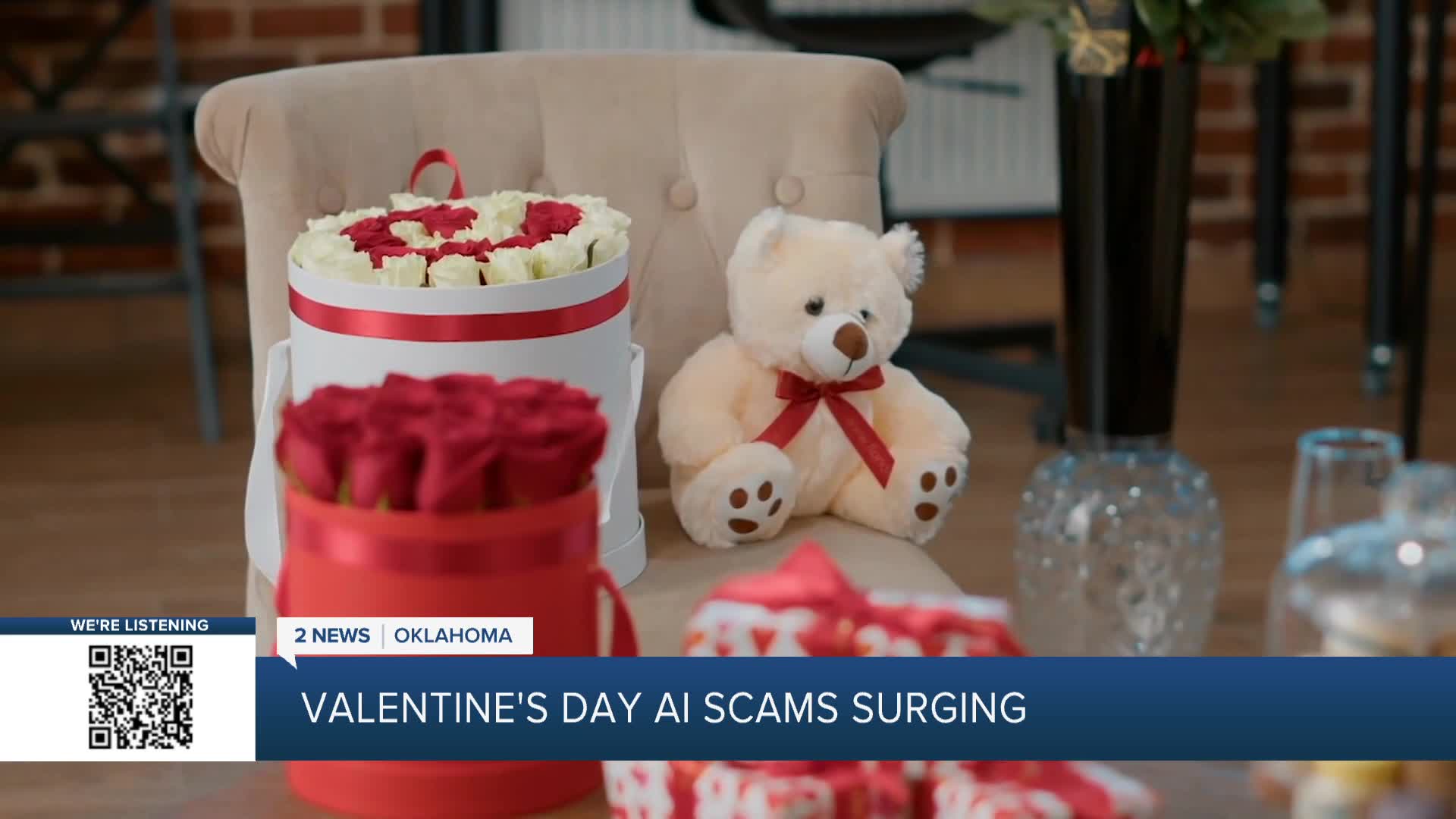


TULSA, Okla. — Cybersecurity experts warn consumers about a surge in AI-powered romance scams that are increasingly sophisticated and harder to detect.
2 News Oklahoma spoke with cybersecurity experts who revealed how criminals use artificial intelligence to create fake personas and build relationships with victims over months before asking for money or luring them into fraudulent cryptocurrency investments.

"We see a large rise in scams against older adults, especially around Valentine's Day, because they target older adults who may be looking for some sort of connection," said Brian Long, CEO of Adaptive Security and AI scam expert. "These criminals are very persistent and patient."
Romance scammers often spend up to a year courting victims, sometimes even sending small gifts to build trust before requesting money or enticing victims to invest in fake cryptocurrency companies. The Federal Trade Commission reported that Americans lost $672 million to romance scams in 2024, with nearly 18,000 complaints filed.

AI makes detection very difficult
Artificial intelligence makes detecting romance scammers extremely tricky, even during video calls, which used to be a reliable way to verify someone's identity.
"We've reached the point where, if you haven't met them in real life, they simply may not exist - it may just be a computer that's talking to you," Long said.
Scammers now use deepfake technology to create real-time face and voice swaps during video chats, making it appear they look and sound like their profile photos when they could be someone completely different, or simply an AI program designed to have conversations.

Red flags to watch for
Lisa Plaggemier, Executive Director of the National Cybersecurity Alliance, outlined key warning signs that someone you met online may be a scammer:
1. They quickly move conversations off dating apps to private messaging platforms like Signal, WhatsApp, or regular texting. Dating apps have trust and safety teams monitoring for suspicious activity, so scammers want to avoid detection.
2. They always have excuses to avoid meeting in person. Even as AI technology makes video calls unreliable for verification, meeting face-to-face remains the only way to know you're speaking with a real person.
3. Any requests for money or financial information. "Any requests for money or anything that can be turned into money, like gift cards or data, personal information, crypto - any financial request at all, is a huge, huge, huge red flag," Plaggemier said.
Breaking the silence
Experts say shame keeps many victims from reporting romance scams, often compounded by victim-blaming from family members or friends upset about the scam survivor's money getting stolen.
"It's victim shame and victim blame," Plaggemier said. "Those are two of the things that actually proliferate the problem, because the less we talk about it, the more it seems to happen."
Plaggemier noted that even the language used to discuss these crimes - calling people "victims" instead of "survivors" or describing money as "lost" rather than "stolen" - carries blame connotations.
Instead, families need to have open conversations about these scams without judgment. When approaching someone who may be targeted, experts recommend asking leading questions rather than directly accusing them of being scammed, which can make them defensive. It also allows the targeted person to reach the conclusion they're being taken advantage of, rather than you telling them they've been scammed.

Who's most at risk
While younger adults are actually victimized more frequently, older adults suffer much higher financial losses when targeted. The most recent government data shows adults over 60 accounted for $174 million - or 53% - of all romance scam losses, with those aged 70-79 losing a median of $10,000 per scam.
Oklahoma ranked 27th among states for internet crime complaints in 2024, but experts believe the actual number is much higher, as three out of four Americans who lose money to online scams never report it.
Protecting yourself and others
Long emphasized that victims shouldn't feel embarrassed or ashamed about being targeted by these sophisticated scams.
"Don't be embarrassed. There are a lot of people this is happening to," Long said, noting that even highly educated professionals, including lawyers, have fallen victim to these schemes.
If you suspect you're being targeted, experts recommend talking to trusted friends or family members and reporting suspicious activity to the platform where you met the person. Victims should also file reports with the FBI's Internet Crime Complaint Center at ic3.gov.
The bottom line: If you haven't met someone in person, remain skeptical about their romantic intentions. And if you are scammed, don't stay silent - reporting helps protect others from falling victim to the same schemes.
This story was reported on-air by a journalist and has been converted to this platform with the assistance of AI. Our editorial team verifies all reporting on all platforms for fairness and accuracy.
Stay in touch with us anytime, anywhere --
- Download our free app for Apple, Android and Kindle devices.
- Sign up for daily newsletters emailed to you
- Like us on Facebook
- Follow us on Instagram
- Watch LIVE 24/7 on YouTube
