

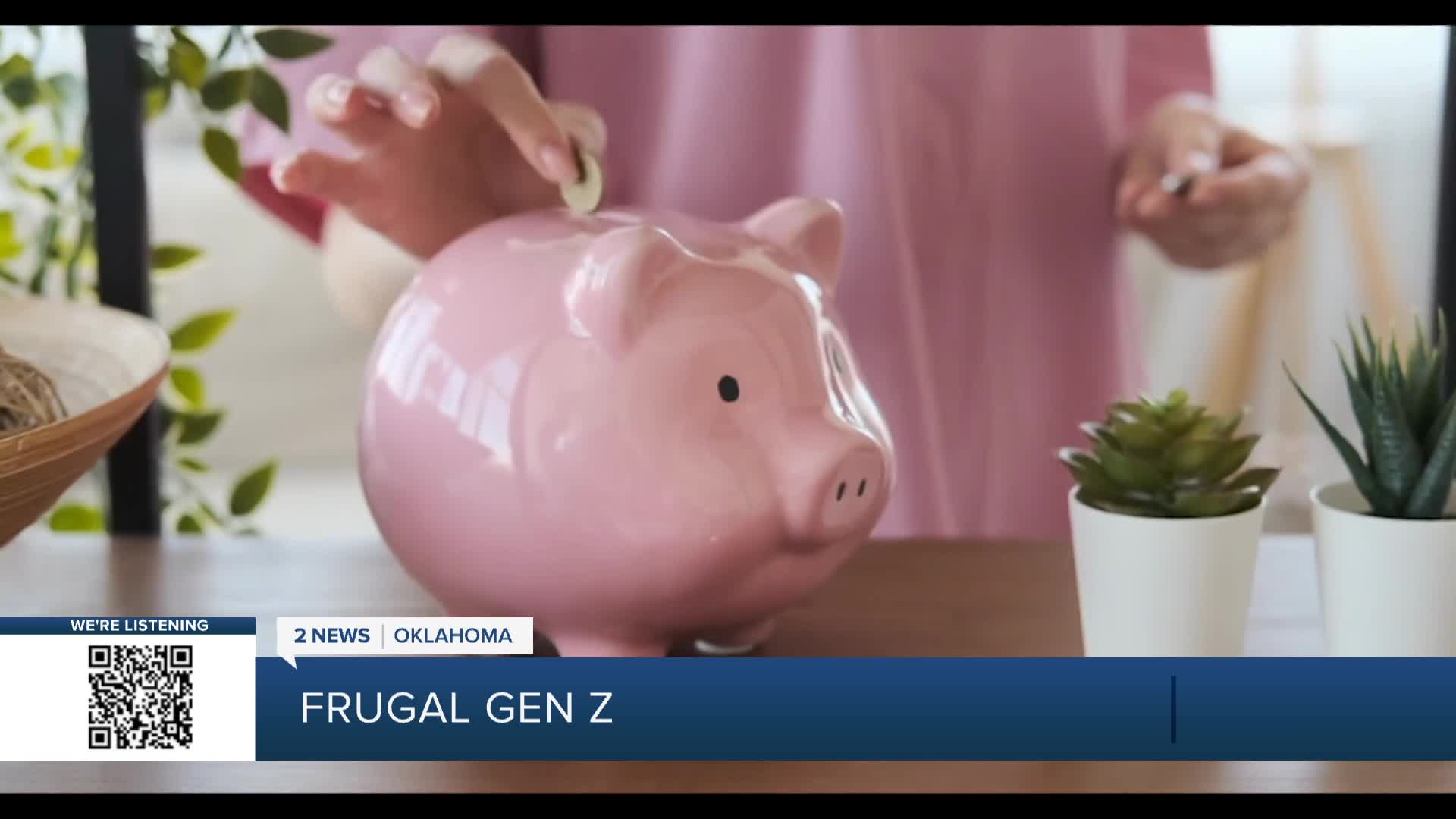


TULSA, Okla. — Gen Z is rewriting the rules around money, openly discussing finances, making frugality a lifestyle, and even letting a partner's spending habits determine relationship compatibility.
That's according to new research from Bank of America's Better Money Habits Gen Z Report, which surveyed adults ages 18 to 29.
The findings are especially relevant in Tulsa, where Gen Z makes up 17% of net inbound migration to Oklahoma, drawn by affordability and quality of life since the pandemic.
But even as they arrive with financial ambitions, many are feeling the squeeze.
Nearly half (42%) of Gen Z respondents say they are living paycheck to paycheck. That number climbs to 51% among those ages 23 to 25, as parental support declines and real-life costs kick in, compared to 36% of younger Gen Z ages 18 to 22.
Mary Burchett of Bank of America said the generation is responding by doing something previous generations rarely did: talking openly about money.
"They're actually starting to have conversations that we've not had in generations past. They're talking about money matters," Burchett said.
Tulsan Robin Cornett knows financial reality firsthand. She said an early lesson with credit cards shaped how she manages money.

"I was young when I got my credit card, and I just kind of used it willy-nilly. I thought it was free money, not free money. You've got to pay it back. Uh, so now I'm just focused on paying it off and getting that down. I have gotten it down, but you know, times have gotten hard, so I had to use it to help pay bills and stuff. But now I'm working on getting it back down again," Cornett said.
When asked what she is doing to pay it down, Cornett said she has a plan.
"I pay on it every two weeks whenever I get paid, take some money out so I can pay it on it, and I like to see if I can put more money towards it," Cornett said.
That kind of intentional approach reflects broader trends in the Bank of America data. Three-quarters of Gen Z, 75%, actively find ways to cut costs when making social plans. And 43% call irresponsible spending habits a romantic deal breaker.
Burchett said financial compatibility is now part of how Gen Z evaluates relationships.
"Generation Z is actually considering whether someone is financially stable before they continue a relationship," Burchett said.

Nearly a quarter, 24%, of Gen Z respondents say they are delaying relationship milestones like moving in together or getting engaged because of their financial situation.
The tension between spending and saving shows up in another striking finding: 92% of Gen Z say they still treat themselves to small purchases, yet 41% experience financial guilt at least once a week, more than any other generation.
Burchett said that guilt is actually driving behavior change.
"I did this and here's the result. I don't necessarily have the money I want in my savings, so they're starting to adjust those habits and look to save a little bit more because they do have those big purchases coming up, engagements, weddings, houses," Burchett said.
And when it comes to saving, Gen Z's mindset toward it leads all generations. More than half, 54%, say if they had an extra $300 a month, they would save it.
This story was reported on-air by a journalist and has been converted to this platform with the assistance of AI. Our editorial team verifies all reporting on all platforms for fairness and accuracy.
Stay in touch with us anytime, anywhere --
- Download our free app for Apple, Android and Kindle devices.
- Sign up for daily newsletters emailed to you
- Like us on Facebook
- Follow us on Instagram
- Watch LIVE 24/7 on YouTube
