

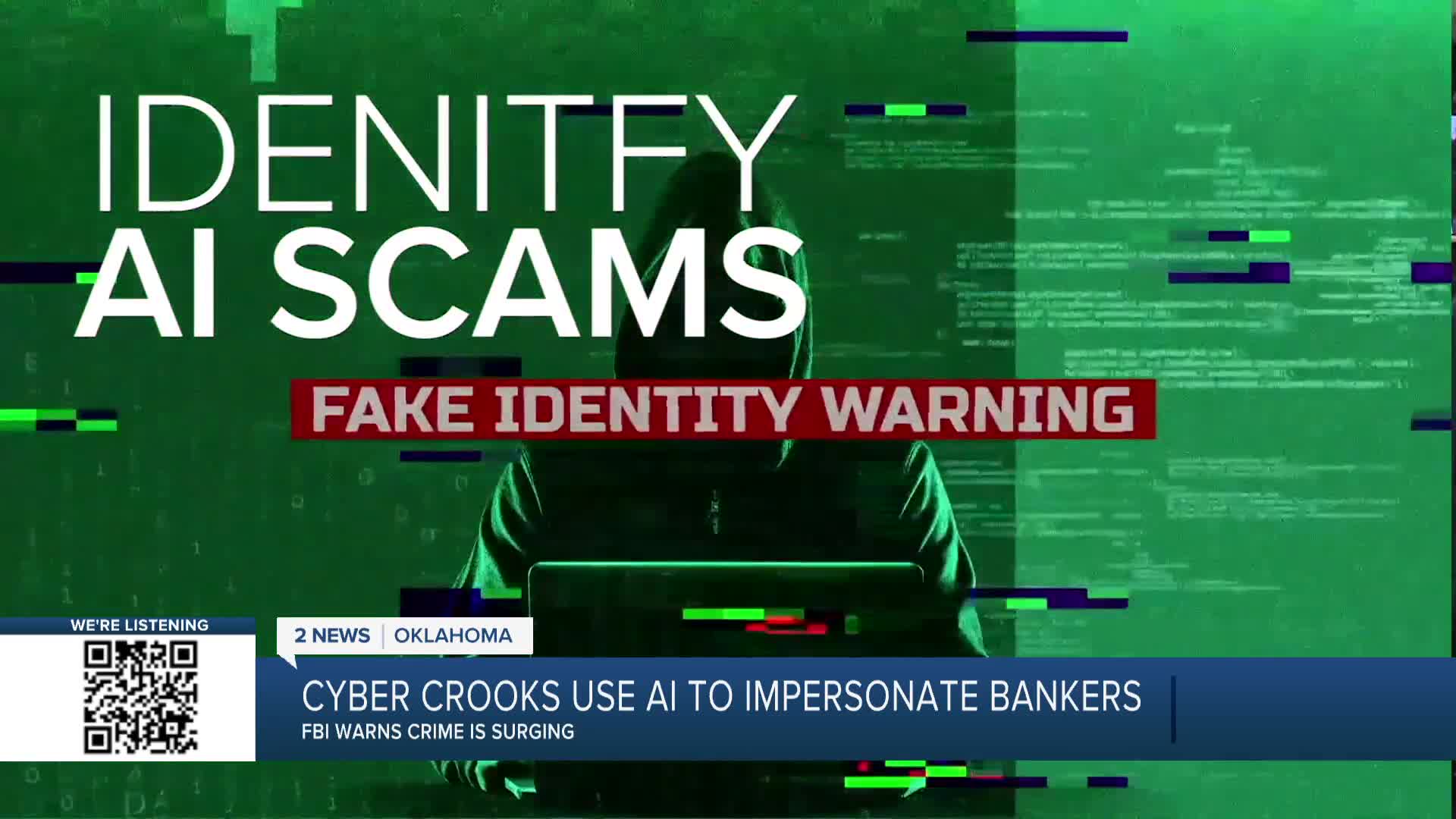


TULSA, Okla. — Cybercriminals are using artificial intelligence to impersonate bank employees and steal money through sophisticated account-takeover schemes, prompting a new FBI warning.
The scam typically begins with a text message, phone call, or email from someone claiming to be from your bank's technical support team. They said they've noticed suspicious activity on your account and need your help to resolve it.
But according to a new FBI alert, it's actually an AI-generated deepfake designed to steal your login credentials and take control of your financial accounts.

"AI has really changed how we work, but it's also changed how fraudsters have worked," said Erin Rogers, director of cyber security risk and compliance at BOK Financial. "It's making things very efficient for them, and they're just really able to scam people en masse."
Since January, the FBI's Internet Crime Complaint Center has received more than 5,100 complaints of account takeover fraud, resulting in losses exceeding $262 million.
How the scam works
The criminals quickly pressure victims to provide login and password information. In some cases, they claim to transfer the call to a law enforcement official investigating the case.
Once they have access to accounts, criminals rapidly wire funds to other criminal-controlled accounts, many of which are linked to cryptocurrency wallets. This makes the money difficult to trace and recover.
In nearly all cases of social engineering, criminals change the password for an online account, locking the legitimate owner out of their financial accounts.
Protecting yourself with 'SHIELD'
Rogers recommends thinking "SHIELD" to protect against these scams:
Stay skeptical of unexpected contacts by phone, email or text message.
Heighten login security with strong, unique passwords and multi-factor authentication. "Boomer Sooner 2025 is not a strong password," Rogers said.
Identify AI scams by being wary of realistic-looking fake websites and deepfakes.
Ensure data privacy by freezing your credit and monitoring all financial accounts regularly.
Look out for Bitcoin withdrawal scam texts claiming you requested a withdrawal.
Download updates regularly to fix security flaws on your devices.

Red flags to watch for
Be suspicious if someone claims to be from your bank:
- Contacts you unexpectedly about suspicious account activity
- Pressures you to provide login credentials immediately
- Claims to transfer you to law enforcement
- Asks you to click on links or download software
What to do if you're targeted
If someone claiming to be with your bank contacts you unexpectedly, hang up, delete the message, and report it as junk.
If you believe you've been victimized:
- Contact your bank immediately if you've shared financial information or made payments
- Reset all compromised passwords and credentials
- File a complaint at the FBI's Internet Crime Complaint Center at ic3.gov
- Notify the impersonated company about the scam method used
Rogers emphasized the importance of acting quickly: "If you feel like you've been a victim of fraud, if you have shared any financial information or made a payment to a fraudster, contact your bank immediately."
The FBI advises using bookmarks or favorites to navigate to banking websites rather than clicking on search results or advertisements, as multi-factor authentication won't protect you if you land on a fraudulent login page.
This story was reported on-air by a journalist and has been converted to this platform with the assistance of AI. Our editorial team verifies all reporting on all platforms for fairness and accuracy.
Stay in touch with us anytime, anywhere --
- Download our free app for Apple, Android and Kindle devices.
- Sign up for daily newsletters emailed to you
- Like us on Facebook
- Follow us on Instagram
- Watch LIVE 24/7 on YouTube
