
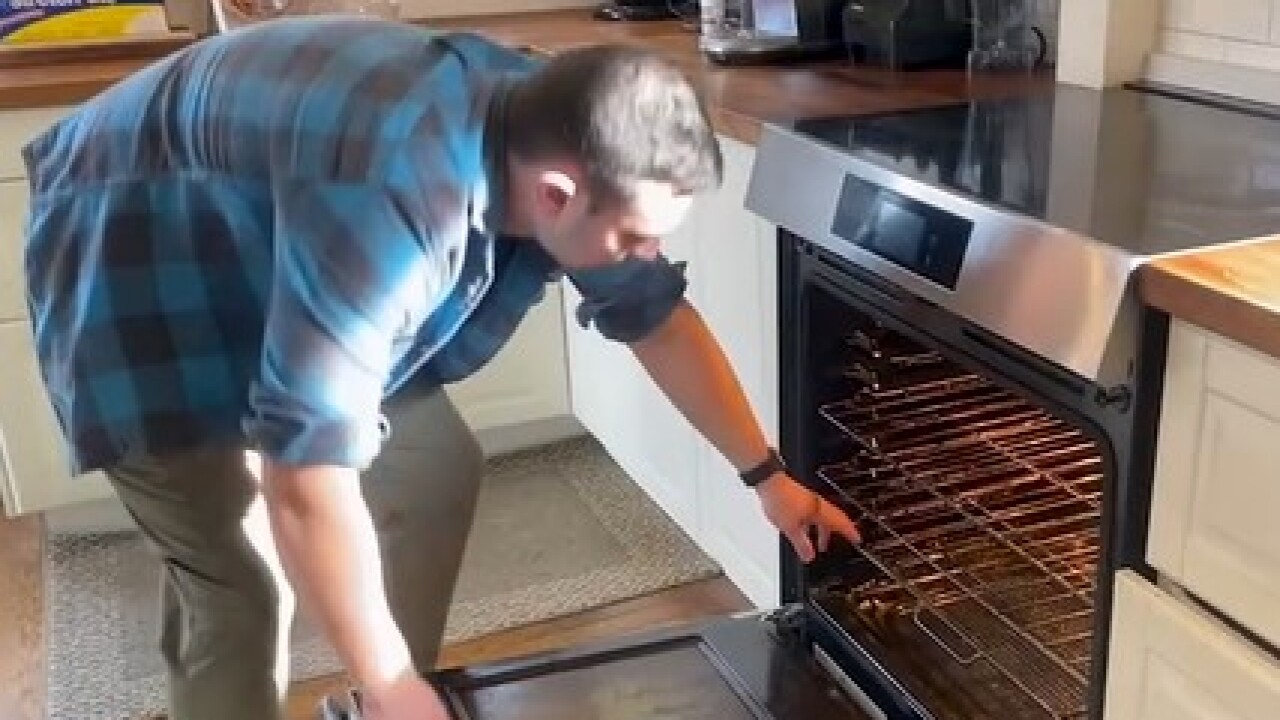


TULSA, Okla. — Turkey, stuffing, pies — your oven's been through a lot during the holidays.
If it’s covered in last year’s drips and splatters, you might be in for more smoke than sizzle the next time you turn it on.
Consumer Reports reveals the easy ways to clean ovens safely, and why that self-clean cycle may not always be the hero you expect.
It’s easy to find a lot of horror stories online about people who say they’ve damaged or destroyed their ovens by running the self-clean cycle. Our testing finds that the self-clean cycle is generally safe to use and pretty effective.
CR says those high temperatures that help your oven clean also produce smoke and fumes, so you’ll want to take a few precautions:
First, keep kids and pets out of the kitchen when you run the self-clean cycle. If you have a range hood, turn it on and open some windows. Remember, the stove top can get hot, so keep it clear.
And just because it’s self-cleaning doesn’t mean you’re totally off the hook; you’ll need to remove the racks and clean those by hand. You’ll also need to wipe down the oven after the cycle to remove the ash buildup.
One final tip from CR: The best approach is to keep your oven as clean as you can while you’re using it, wipe up spills up as they occur and clean up grease after you cook something fatty like a chicken or a roast.
Another thing to keep in mind is that the oven door locks for the entire cycle, which can take up to 5 hours. If you start the self-clean cycle later in the day, it might be a good night to order takeout.
No self-clean cycle, no problem. Visit CR.org to learn how to deep clean an oven without a self-clean feature.
Stay in touch with us anytime, anywhere --
- Download our free app for Apple, Android and Kindle devices.
- Sign up for daily newsletters emailed to you
- Like us on Facebook
- Follow us on Instagram
- Watch LIVE 24/7 on YouTube
