

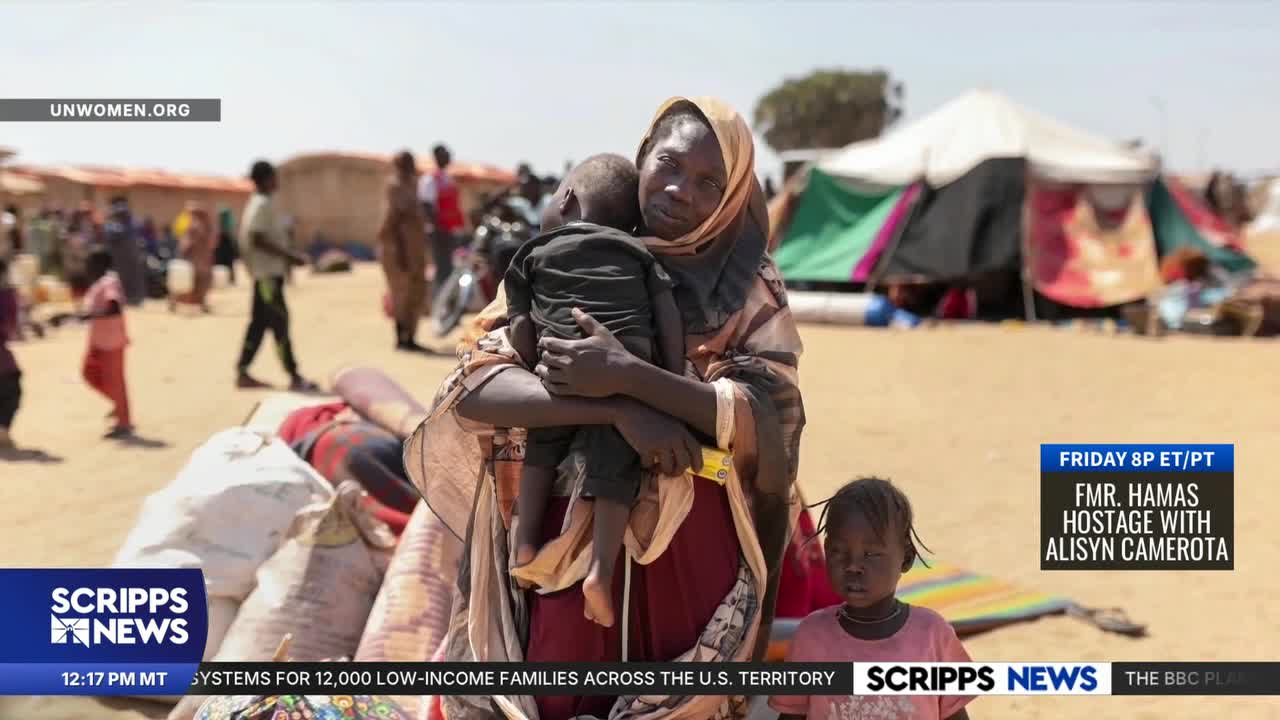


Inside a hospital in Khartoum, Sudan, doctors quietly refer to one space as the “Yellow Floor Room” — a place reserved for survivors of sexual violence.
Scripps News, the first American media organization allowed into the country since the massacre in Darfur, witnessed the conditions inside firsthand.
Now, as Sudan enters its fourth year of war, those rooms are rarely empty.
A United Nations report released this week shows 12.7 million women and girls in Sudan will need support related to sexual and gender-based violence this year — four times higher than before the conflict began.
The U.N. cites overwhelming evidence that sexual violence is being systematically used as a tactic of war, including along escape routes from Kordofan and Darfur.
IN CASE YOU MISSED IT | Inside Sudan's hidden genocide: Eyewitness accounts from the world's worst humanitarian crisis
Doctors Without Borders, also known as MSF, says the recent fall of Al-Fasher has triggered a surge in attacks. In North Darfur, 95% of survivors treated by MSF identified their attackers as armed men.
Hundreds of miles from the front lines in South Darfur, nearly two-thirds of reported assaults involved multiple attackers. Many occurred while women were carrying out daily tasks such as collecting water or tending fields.
MSF’s report marking the third anniversary of the war is titled “There’s Something I Want to Tell You,” a phrase doctors say they often hear from survivors when they finally seek care in Sudan’s collapsing health system. Many women delay seeking help until they learn they are pregnant.
“They think about, ‘How can I deliver this baby? And how can I face the community with this baby?” Dr. Inas Mohammed Ibrahim told Scripps News.
For others, there is no community left — only survival. More than 4 million women and girls are internally displaced across Sudan.
The United Nations is seeking $2.5 billion in aid to address the crisis this year. So far, only a fraction of that has been funded.
