

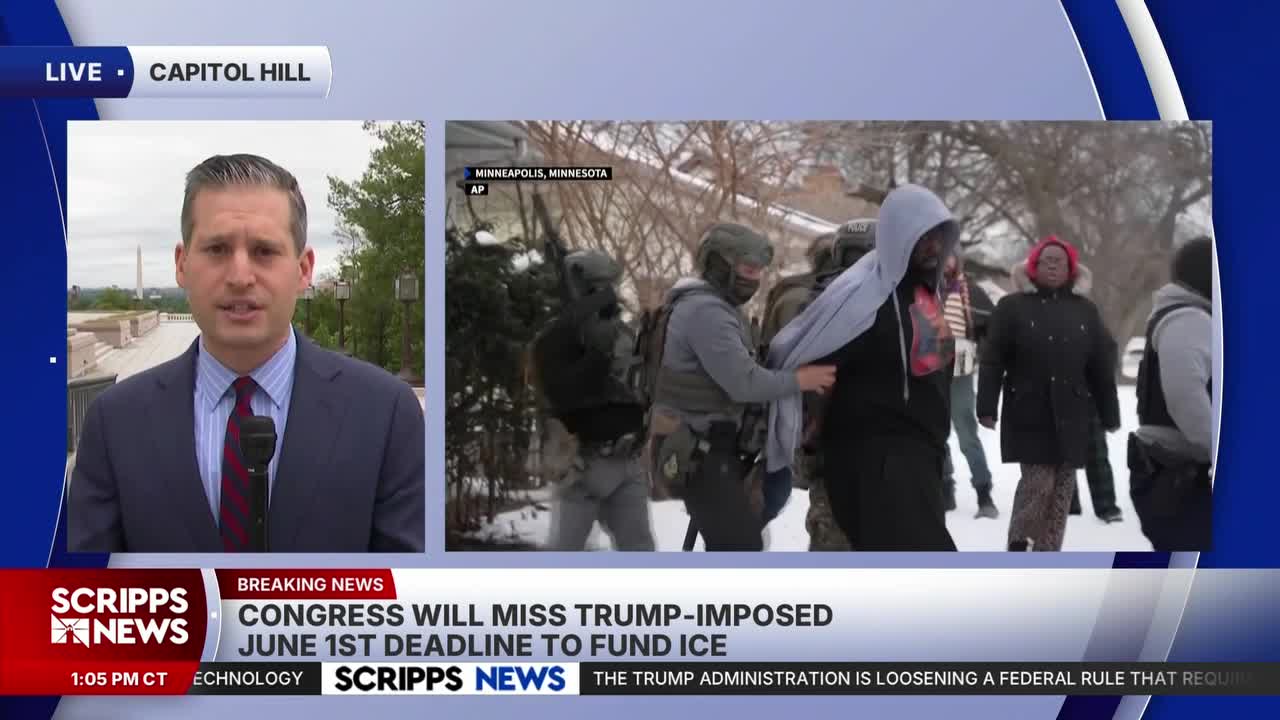


Congress is now expected to miss President Donald Trump’s self-imposed June 1 deadline to pass a roughly $70 billion funding package for ICE and Customs and Border Protection.
The package also includes $1 billion for ballroom security, as well as a controversial $1.8 billion “anti-weaponization fund” sought by Trump. Senate Republicans were planning to pass the measure without Democratic support, but divisions within the GOP over the proposal stalled momentum Thursday.
Senators had been expected to begin voting on the package Thursday before Republicans abruptly decided to send members home for the weekend.
RELATED STORY | Senate Republicans resist Trump's push to fire 'brutal' parliamentarian over ballroom funding
The proposed anti-weaponization fund, which is part of Trump's settlement stemming from a lawsuit against the IRS, drew significant scrutiny from Republicans following a meeting with acting Attorney General Todd Blanche. The fund would allow people prosecuted during the Biden administration to apply for compensation, including people charged in connection with the Jan. 6 Capitol riot.
Concerns within the Republican conference appeared to intensify throughout the day, ultimately derailing plans to move forward with the legislation.
Democratic Sen. Chris Coons said earlier Thursday that Republican divisions were causing the package to unravel.
“The president chose sides in two primaries. One’s already gone badly. The other one’s looking like it may,” Coons said. “And as a result, you’ve got Republicans internally in disarray about exactly what they’re willing to support, including specifically a billion dollars for a ballroom and $1.7 billion for a settlement fund.”
RELATED STORY | What is the Trump administration's $1.8 billion ‘anti-weaponization fund’ for?
Earlier this week, Trump endorsed Ken Paxton in his Republican primary challenge against incumbent Sen. John Cornyn, a move that was not well-received within the Senate Republican Conference.
Senate Majority Leader John Thune has made clear he supports Cornyn’s reelection bid, arguing Cornyn would be easier for Republicans to defend politically and financially in Texas.
The GOP conference is also still grappling with the recent primary loss of Sen. Bill Cassidy in Louisiana. Trump had opposed Cassidy, who voted to convict him following the Jan. 6 insurrection.
